
Fascia & Soffit Damage: Early Warning Signs Ohio Homeowners Miss
The early signs of fascia and soffit damage most Ohio homeowners miss — for Cleveland, Columbus & Dayton homes facing water, wind, and freeze-thaw wear.
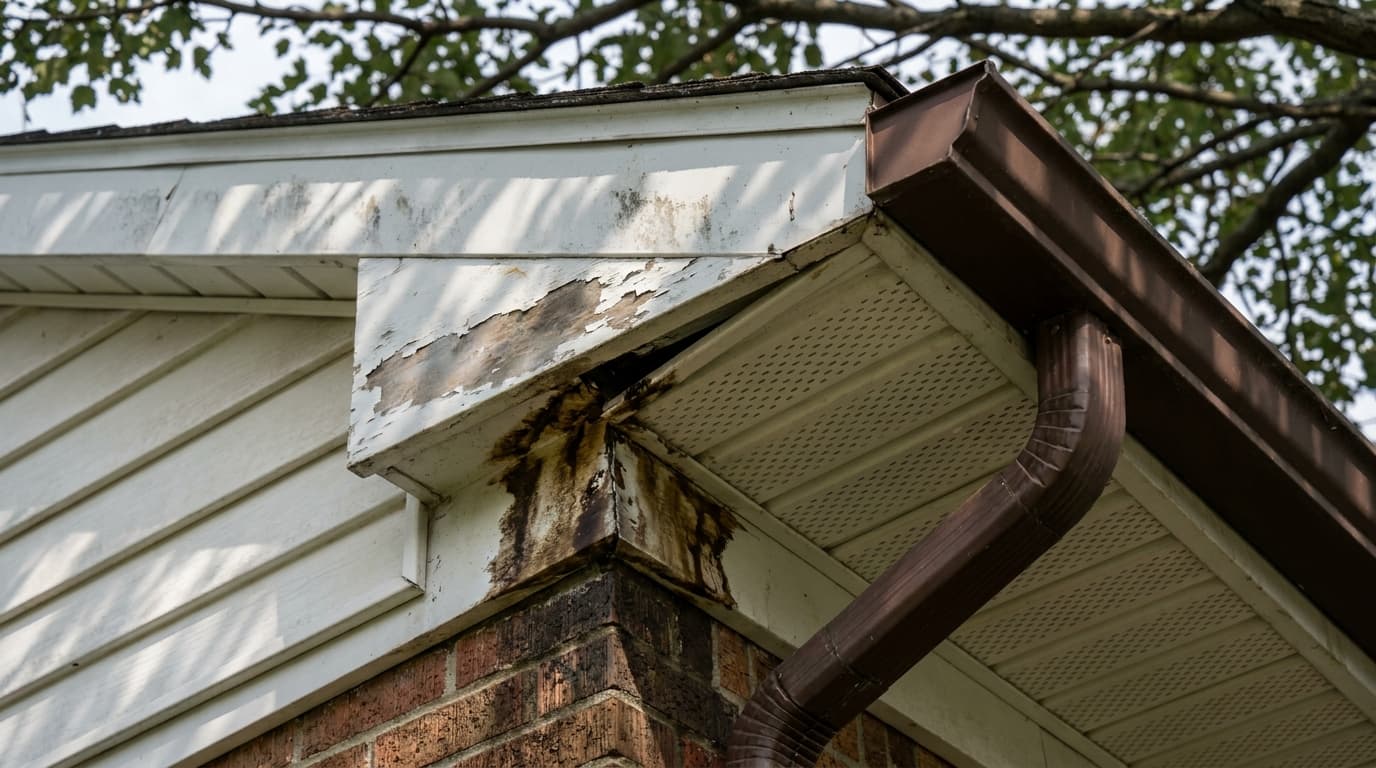
The earliest signs of fascia and soffit damage are subtle — peeling paint at the eaves, dark streaks behind the gutter, soft spots in the wood trim, or small gaps where animals can enter — and most Ohio homeowners don't notice until the damage has already reached the roof deck. Cleveland, Columbus, and Dayton homes all face the same culprits: clogged gutters, ice dams, wind-driven rain, and simple age. Catching the early signs saves thousands in structural repair later.
Fascia and soffit are the unsung workhorses of your exterior envelope. The fascia is the vertical board behind your gutter — it's what the gutter hangs on, and what caps the ends of the rafters. The soffit is the horizontal panel underneath the roof overhang, often vented to let your attic breathe. When either one fails, water, pests, and energy loss follow.
Why Ohio homes are especially vulnerable
Three seasonal stresses hit Ohio fascia and soffit hard:
- Freeze-thaw cycles crack paint and open tiny seams where moisture wicks in.
- Ice dams push water back up under the shingles and down onto the fascia.
- Severe summer storms drive rain sideways under the overhang into the soffit.
Cleveland gets the heaviest freeze-thaw and ice-dam stress. Columbus sees long summer storm seasons. Dayton combines storm exposure with high humidity. All three markets show the same damage patterns — just on slightly different timelines.
8 early warning signs to watch for
1. Peeling or bubbling paint on the fascia
The paint film is usually the first casualty. Bubbling means moisture has gotten behind the paint — a sign the wood underneath is wet or has been wet recently.
2. Dark streaks or staining on fascia behind the gutter
Stand back on the lawn and look up at the gutter line. Dark vertical or horizontal staining on the fascia means water has been escaping the gutter and running down — or wicking behind it.
3. Soft or spongy fascia when pressed
If you can reach the fascia (ladder with a spotter, please) and press it with a fingertip or screwdriver, it should feel firm. Any softness, sponginess, or give means rot has already started under the paint.
4. Visible wood rot or discoloration
Brown, black, or green discoloration on unpainted sections of fascia or soffit is active rot or mildew. Once you can see it, the rot extends further than the visible edge — usually by a significant margin.
5. Sagging soffit panels
Soffit panels should sit flat and tight. Any sagging, drooping, or separation from the fascia indicates the soffit is holding moisture or the nailing surface behind it has deteriorated.
6. Small holes or gaps where soffit meets fascia
Gaps create an open invitation for squirrels, bats, birds, and wasps — all of which are happy to move into an Ohio attic. If you see daylight where there shouldn't be any, the seal has failed.
7. Pest activity around the eaves
Birds nesting in the overhang, squirrel traffic along the gutter line, or wasp nests tucked under the soffit are all signs the barrier isn't intact. Pests find gaps long before most homeowners do.
8. Interior stains on upstairs ceilings or at the top of exterior walls
Water that gets past failed fascia and soffit often shows up inside the house — as a brown halo on a second-floor ceiling or a damp spot at the top of an exterior wall. By the time the interior shows it, the exterior damage is well established.
The usual root causes
Fascia and soffit rarely fail on their own. The real culprit is almost always one of these:
Clogged or overflowing gutters
When gutters back up, water spills behind the trough and runs down the fascia instead of away from it. This is the #1 cause of fascia rot in Ohio.
Ice dams
Ice dams form when warm attic air melts snow on the roof, water runs down to the cold eaves, and refreezes into a ridge of ice. The backed-up water forces its way under shingles and onto the fascia and soffit.
Wind-driven rain
Severe storms drive water horizontally under the roof overhang, where it gets past any weak seam in the soffit.
Blocked soffit vents
If your soffit vents are painted over, clogged with insulation, or pest-nested, attic humidity stays trapped — rotting the soffit from the inside.
Simple age
Wood fascia exposed to 25+ Ohio winters will eventually need replacement, even with perfect maintenance.
What to do if you spot these signs
- Document what you see — photos from the ground, dated.
- Clean and inspect the gutters — most fascia problems start there.
- Check the attic from inside — look for water stains on rafters near the eaves.
- Get a professional inspection — a good Ohio gutter/exterior contractor can check fascia, soffit, gutters, and drip edge in one visit.
- Repair the root cause before replacing the wood — new fascia installed over failing gutters will fail again fast.
Regional notes for Cleveland, Columbus, and Dayton
Cleveland
Ice-dam damage is the dominant fascia culprit in Cleveland. Spring is the best window for inspection — any damage will be visible before summer paint jobs cover it up.
Columbus
Columbus homes tend to show fascia damage from long summer storm cycles and clogged gutters. If your Columbus gutters haven't been cleaned in more than a year, the fascia behind them is worth a close look.
Dayton
Dayton's storm history and humidity combine to accelerate fascia and soffit wear. After severe storms, check the eaves for loose or separated soffit panels — wind events often create small failures that take weeks to show water damage.
Catching it early is the whole game
Fascia and soffit repair in Ohio is cheap and fast when caught early — and expensive and disruptive when caught late. The difference is a 20-minute walk around the house twice a year and a ladder check after big storms. If anything on this list looks familiar, don't wait for the next winter to find out how bad it is.
Frequently Asked Questions
What are the earliest signs of fascia damage on a Cleveland home?
In Cleveland, the earliest signs are peeling paint on the fascia, dark staining behind the gutter line, and soft spots in the wood — almost always caused by ice-dam backup or overflowing gutters. Spring is the ideal time to inspect before summer paint and foliage hide the evidence.
How do Columbus, Ohio homeowners know if their soffit is rotting?
Columbus homeowners should look for sagging soffit panels, discoloration on the underside of the overhang, and pest activity near the eaves. Blocked soffit vents and clogged gutters are the most common causes in central Ohio.
When should Dayton homeowners inspect their fascia and soffit?
Dayton homeowners should inspect fascia and soffit every spring, every fall, and after any significant storm. Wind-driven rain and high humidity make southwestern Ohio especially hard on the eaves, and small storm failures can lead to visible water damage within weeks.
A friendly second set of eyes
If you've spotted any of these warning signs on your Cleveland, Columbus, or Dayton home, the Zipco Gutters team is happy to come take a look. We'll check fascia, soffit, gutters, and drip edge together — and give you a straight answer on what needs work now and what can wait.
Get a free gutter quote in your city
Serving Cleveland, Columbus, and Dayton with seamless aluminum gutters, written quotes, and a workmanship warranty.