
Ice Dams 101: Protecting Your Ohio Home Through Winter
How Ohio homeowners in Cleveland, Columbus, and Dayton can prevent ice dams and winter gutter damage with simple steps.
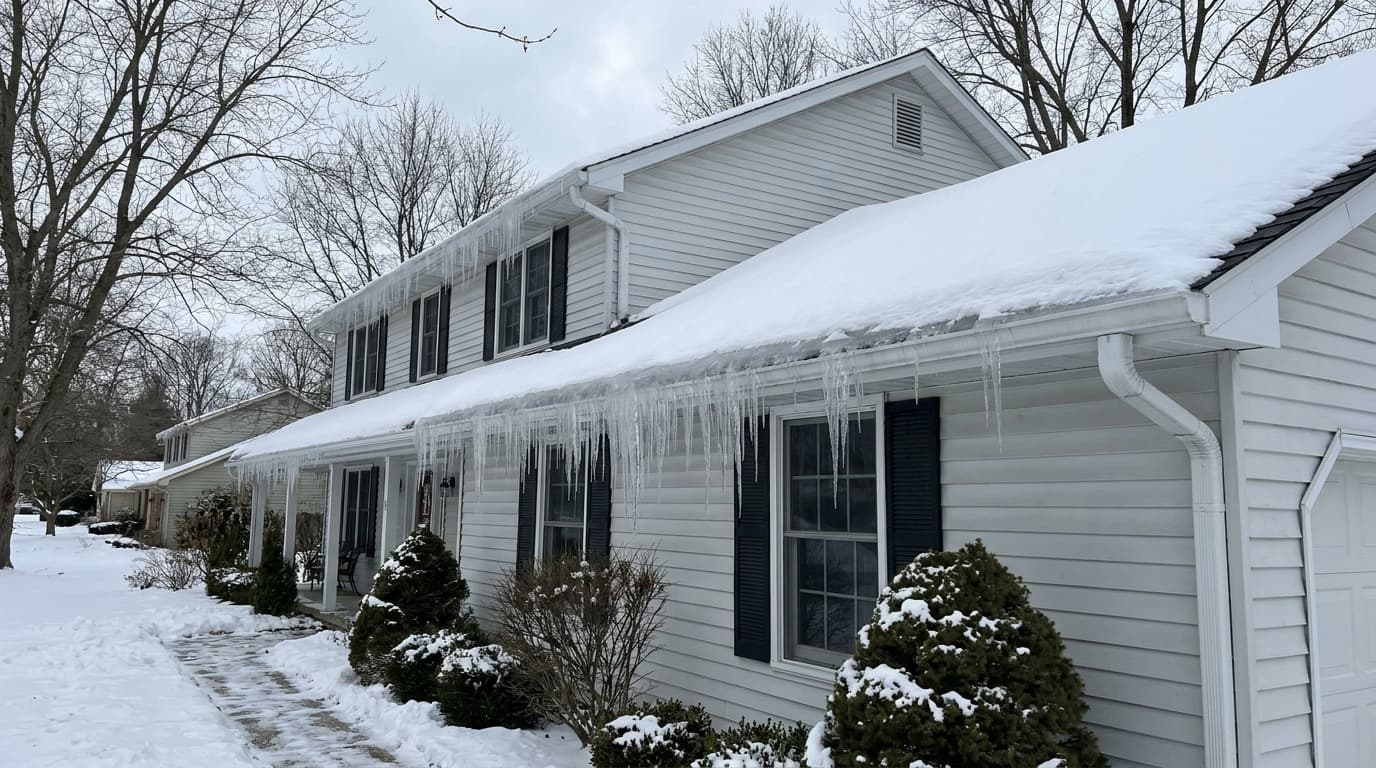
You prevent ice dams by keeping your attic cold and your gutters clean — proper attic insulation, airtight ceiling sealing, balanced attic ventilation, and clear gutters stop the freeze-thaw cycle that creates them. Cleveland, Columbus, and Dayton homeowners all see ice dams in a typical Ohio winter, but Cleveland's lake-effect climate and extreme freeze-thaw cycles make it the hardest-hit metro of the three.
Here's how ice dams form, what they damage, and the practical steps to keep them off your home.
What an Ice Dam Actually Is
An ice dam is a ridge of ice that forms at the edge of your roof and blocks melting snow from draining off. The meltwater backs up behind the dam, works its way under shingles, and leaks into the attic, walls, and ceilings. The damage is almost always invisible until it's expensive.
They form from a simple physics problem: warm air escapes from inside your home into the attic, warms the underside of the roof, and melts snow on the upper roof. The water runs down to the eave — which is colder because it overhangs the unheated exterior — and freezes. Each freeze-thaw cycle makes the dam thicker.
Why Ohio Is a Perfect Ice Dam Laboratory
Ohio winters see repeated swings across freezing, which is the exact condition ice dams need.
- Cleveland: Lake-effect snow dumps heavy, wet snow repeatedly. Dozens of freeze-thaw cycles per winter. The most ice-dam-prone metro in Ohio.
- Columbus: Balanced but real winter cold, with multi-day snow cover and regular freeze-thaw events.
- Dayton: Milder average winters, but repeated freeze-thaw swings still produce ice dams, especially on older homes with under-insulated attics.
A single bad ice dam can cause thousands in interior water damage — much of it hidden in insulation and drywall for months.
The Five Steps to Prevent Ice Dams
1. Seal Air Leaks Into the Attic
The biggest single cause of ice dams is warm household air leaking through the ceiling plane into the attic. Recessed lights, attic hatches, plumbing stacks, and top plates are common culprits. Seal them with foam, caulk, or purpose-built covers before adding insulation.
2. Insulate the Attic Floor Correctly
Ohio homes should hit a minimum of R-49 attic insulation (roughly 14 inches of blown cellulose or fiberglass). Many Cleveland, Columbus, and Dayton homes built before 2000 are far below that number. Adding insulation without first sealing leaks just traps the heat leakage — do them together.
3. Balance Attic Ventilation
Soffit intake plus ridge exhaust keeps the attic within a few degrees of outdoor air. If intake vents are blocked by insulation, or exhaust is missing entirely, the attic cooks in winter and ice dams form reliably.
4. Keep Gutters and Downspouts Clear
Leaves and debris in the gutter trap meltwater, which freezes faster and thicker. A late-fall professional cleaning dramatically reduces ice-dam severity. Quality gutter guards help, but only if the gutter was properly pitched and cleaned before the guard went on.
5. Consider Heated Cable Systems for Problem Areas
For homes with chronic ice-dam spots — north-facing eaves, dormer valleys, shaded corners — self-regulating heat cables in the gutters and along the drip edge are a reliable targeted fix. They're not a whole-home cure, but they prevent damage in the spots that reliably freeze.
What to Do If an Ice Dam Is Already Forming
Do not:
- Climb onto an icy roof
- Chip at the ice with an axe, shovel, or hammer (you will damage shingles and injure yourself)
- Run rock salt directly on shingles
Do:
- Use a roof rake from the ground to pull snow off the lower 3–4 feet of the roof after every storm
- Hire a pro to steam-remove a severe dam (standard pressure washers crack shingles)
- Watch for interior stains on ceilings and top-floor walls — early signs of backup
When to Bring in a Gutter Professional
Call a gutter company when you see:
- Thick icicles hanging along the eave
- Visible water staining on soffits or fascia
- Gutters pulling away from the house in winter
- Repeat ice dams in the same location every year
These almost always point to a mix of insulation, ventilation, and gutter issues that a pro can diagnose together rather than treat as separate problems.
The Takeaway
Ice dams aren't random bad luck — they're a predictable outcome of warm attics, cold eaves, and dirty gutters. Cleveland, Columbus, and Dayton homeowners who seal, insulate, ventilate, and maintain their gutters rarely get them. Those who skip one of those four things usually do.
Zipco Gutters handles pre-winter inspections, heated cable installs, and storm-season repairs across Cleveland, Columbus, and Dayton — and we're happy to walk your roofline with you before the first freeze.
Frequently Asked Questions
Q: Why do Cleveland, Ohio homes get so many ice dams? A: Cleveland's lake-effect snow, heavy and repeated snow loads, and dozens of winter freeze-thaw cycles create near-perfect ice-dam conditions. Most Cleveland ice dams trace back to warm air leaking into under-insulated attics combined with gutters clogged from the fall leaf drop.
Q: How do Columbus homeowners prevent ice dams through a normal Ohio winter? A: Columbus homeowners prevent ice dams by air-sealing the attic, adding insulation to at least R-49, maintaining balanced soffit-and-ridge ventilation, and scheduling a late-fall gutter cleaning. Heated cables in chronic problem spots add a targeted safety net.
Q: Are heated gutters worth installing on Dayton homes? A: Heated gutter cables are worth it on Dayton homes with recurring ice-dam spots — typically north-facing eaves, dormer valleys, or shaded corners. They're not needed on every home, but for repeat problem areas they're a cost-effective fix compared to the water damage a single bad winter can cause.
Get a free gutter quote in your city
Serving Cleveland, Columbus, and Dayton with seamless aluminum gutters, written quotes, and a workmanship warranty.