
7 Signs It's Time to Replace Your Gutters (Ohio Checklist)
An Ohio homeowner's checklist: 7 clear signs your gutters need replacing — for Cleveland, Columbus & Dayton homes handling real Midwest weather.
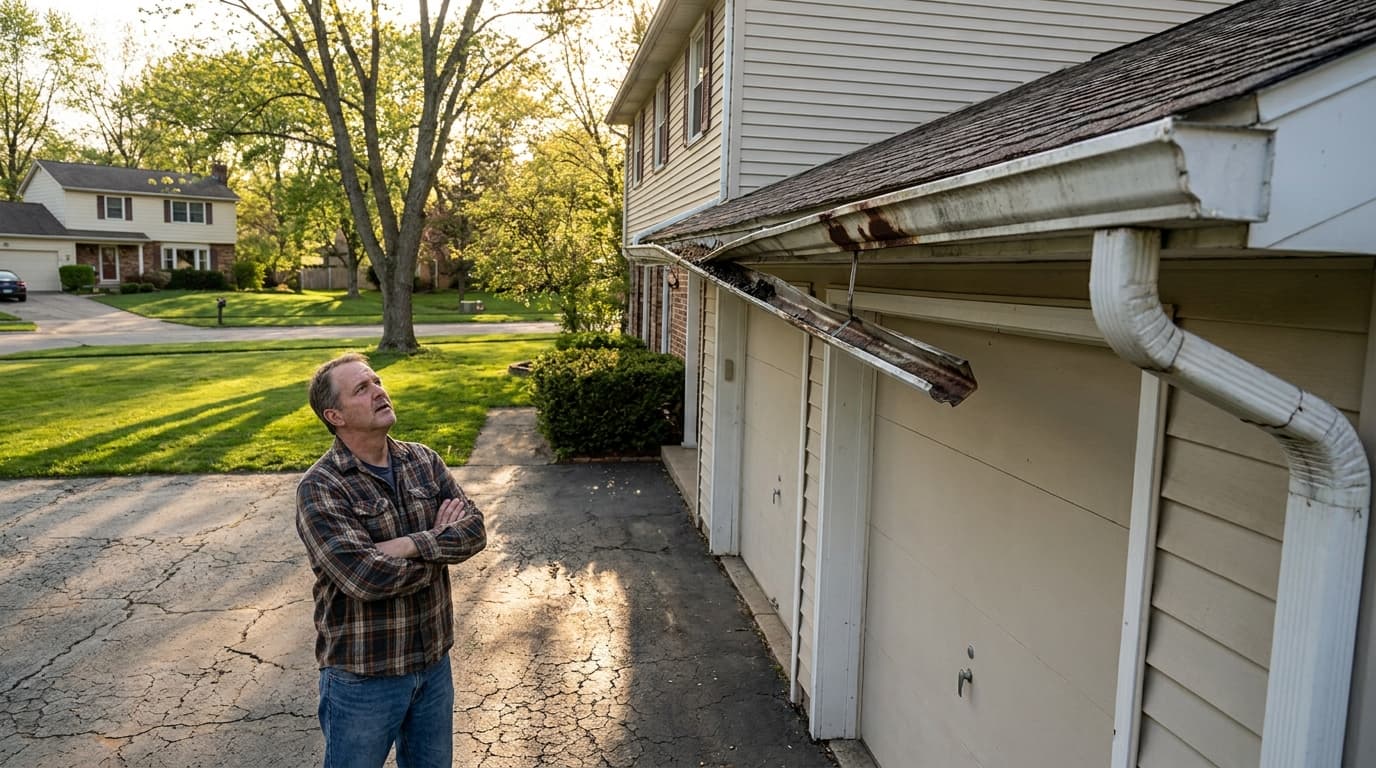
If your gutters are sagging, rusting, pulling away from the fascia, leaking at the seams, causing basement moisture, or visibly damaged after a storm, it's time to replace them — not patch them. Ohio weather is hard on gutters, and homeowners in Cleveland, Columbus, and Dayton tend to wait too long, spending money on repairs that only buy a season. This checklist will help you tell the difference between a gutter that can be repaired and one that's already done.
Most Ohio aluminum gutters last 20–30 years depending on gauge and maintenance. After that, small problems compound into structural ones — fascia rot, foundation cracks, basement leaks. The sooner you catch the tipping point, the cheaper the fix.
Sign 1: Sagging or pulling away from the house
A properly hung gutter should sit tight to the fascia along its entire run. If you can see a gap between the back of the gutter and the fascia board, or the whole run is sagging in the middle, the hangers have failed — or the fascia behind them has rotted. In Ohio, this is usually a sign the gutter has been carrying ice or debris loads it was never rated for.
What to look for
- Visible gap between gutter and fascia
- A dip or belly in the middle of a long run
- Hangers pulling loose or visibly bent
Sign 2: Holes, pitting, or cracks in the trough
Modern seamless aluminum gutters don't rust, but after decades in Ohio weather they can pit, crack, or split from freeze-thaw stress and repeated ice loading. Pinholes along the bottom of the trough, hairline splits at stress points, or visible light through the metal all mean the aluminum has reached end-of-life. Patching buys a season at best.
Sign 3: Leaking seams and joints
Sectional gutters (joined every 10 feet) leak at the seams over time. Every Ohio freeze-thaw cycle stresses the sealant. If you've resealed the same joints more than once, it's time to move to seamless gutters — which have no joints except at corners and downspouts.
Sign 4: Peeling paint or dark water stains on siding
Vertical stains on your siding, especially directly below a gutter seam, mean water has been escaping the gutter and running down the wall. Over time, this rots siding, peels paint, and eventually gets behind the exterior envelope. Dirty-water streaks and mildew lines on white siding are dead giveaways on older homes across Cleveland, Columbus, and Dayton.
Sign 5: Water pooling near the foundation
Walk your house after the next hard rain. If you see pooled water, muddy splash patterns, or erosion trenches near the foundation, your gutters (or downspouts) aren't moving water far enough from the house. Ohio basements and crawl spaces pay the price — moisture, mold, and eventually foundation cracks.
Sign 6: Visible storm damage
Ohio storms hit gutters hard. After severe weather, walk around the house and look for:
- Dents or dimples in the trough or downspout (hail)
- Sections that have pulled loose or folded (wind)
- Downspouts separated at the elbows
- Debris wedged into the gutter that has deformed the shape
If the damage is localized, repair may be fine. If it spans multiple runs, replacement is the smarter investment — and your insurance may cover it.
Sign 7: Fascia or soffit rot showing through
Look up at the wood trim behind and below the gutter. If the fascia is soft, stained, or actively rotting, the gutter has been leaking long enough to cause structural damage. At that point, the gutter is the symptom — fascia repair + gutter replacement is the complete fix. (For a deeper read on fascia and soffit damage, see our dedicated post.)
Regional notes for Cleveland, Columbus, and Dayton
Cleveland
Cleveland gutters take the worst of Ohio's freeze-thaw cycles. Ice-dam damage often shows up as deformed or sagging gutters in late winter. If your Cleveland gutters came out of last winter worse than they went in, spring is the right window to replace.
Columbus
Columbus homes see heavy summer downpours that expose undersized or clogged gutters fast. If overflow has been a recurring problem, replacement with properly sized seamless gutters solves two issues at once.
Dayton
Dayton gets the heaviest hail and wind exposure of the three metros. Hail damage is sometimes subtle — small dimples that don't look like much but compromise the coating and accelerate aging. After any significant Dayton storm, it's worth a walk-around.
When repair is still the right call
Not every sign means full replacement. Consider repair if:
- Damage is limited to one section or one downspout
- Seams are leaking but the trough itself is sound
- Fascia is dry and intact
- Gutters are under 15 years old and otherwise in good shape
When replacement is clearly the smarter investment
Replacement wins when:
- Gutters are 20+ years old
- Multiple signs on this checklist show up at once
- Fascia repair is already in scope
- You're upgrading to 6-inch gutters anyway
- You're adding gutter guards
Frequently Asked Questions
When should Cleveland homeowners replace their gutters?
Cleveland homeowners should strongly consider gutter replacement after 20 years, after ice-dam-related deformation, or anytime multiple signs — sagging, seam leaks, or fascia staining — show up on the same house. Freeze-thaw exposure means Cleveland gutters often reach end-of-life sooner than homes further south.
How do I know if my Columbus, Ohio gutters need replacing or just repair?
In Columbus, repair is reasonable if the damage is limited to one section and the fascia is dry. Replacement is the smarter call if your gutters are 20+ years old, regularly overflow during summer storms, or show multiple signs on this checklist at once.
What should Dayton homeowners check after a major storm?
Dayton homeowners should walk the house after storms and look for dented troughs, separated downspouts, loose sections, and splash patterns at the foundation. Hail damage is often subtle in Dayton, so if anything looks off, it's worth a professional inspection before the next storm.
Not sure where your gutters stand?
If your Cleveland, Columbus, or Dayton home is showing one or more of these signs, the Zipco Gutters team is happy to take a look and give you a straight answer on repair vs. replacement — no pressure, just a neighborly assessment.
Get a free gutter quote in your city
Serving Cleveland, Columbus, and Dayton with seamless aluminum gutters, written quotes, and a workmanship warranty.