
Copper, Aluminum, or Steel? Choosing Gutter Material for Your Ohio Home
Copper, aluminum, or steel gutters for your Ohio home? A neighborly comparison of cost, durability, and looks for Cleveland, Columbus & Dayton homeowners.
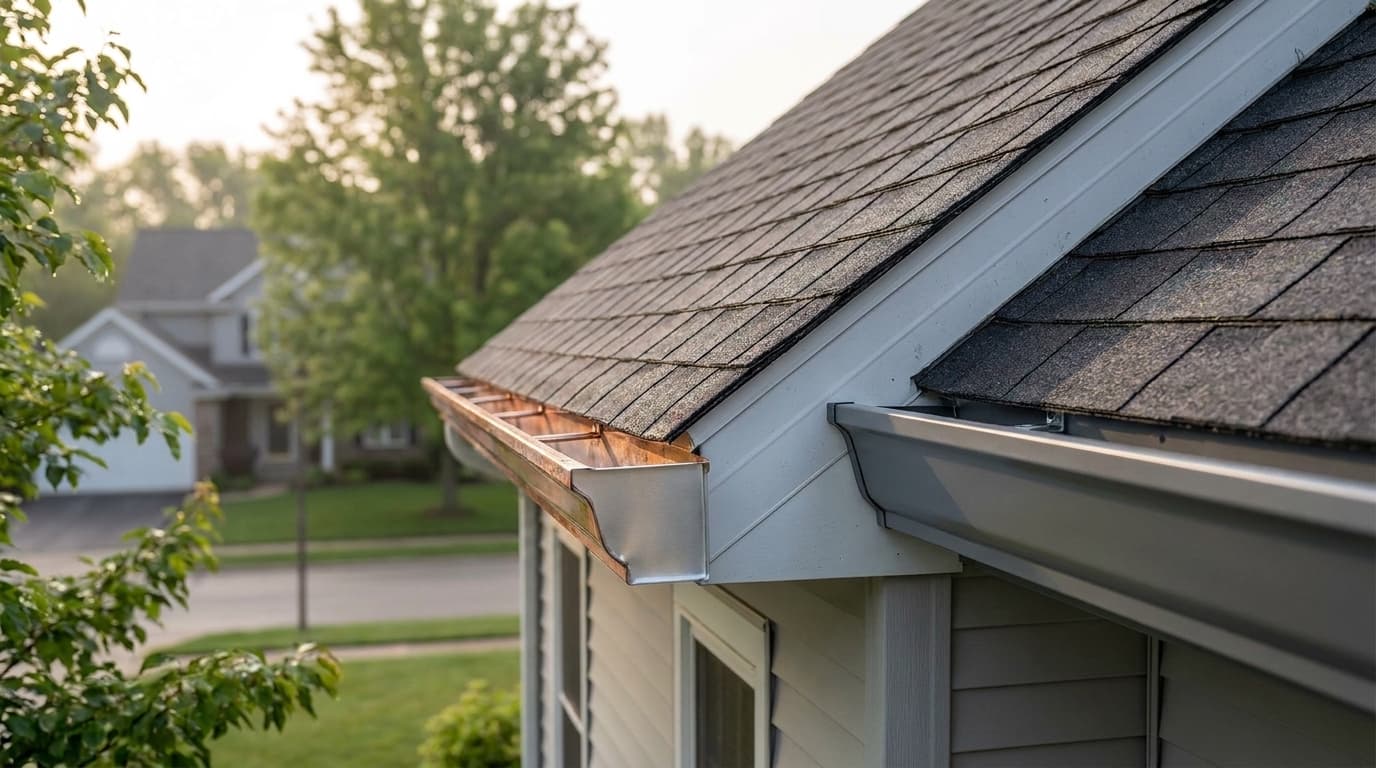
For the vast majority of Ohio homes, seamless aluminum is the right choice — it resists rust, handles freeze-thaw well, comes in dozens of colors, and offers the best balance of cost and durability. Steel is the tougher option for homes that take a beating from wind, hail, or falling branches, while copper is a premium, long-lasting upgrade for historic and high-end homes where looks and longevity justify the cost. The best material for your house depends on your budget, your architecture, and how much weather your home actually faces.
Gutters aren't glamorous, but the material you choose determines how long they last, how much maintenance they need, and how your home looks from the curb for the next several decades. In Cleveland, Columbus, and Dayton, the same three materials come up again and again — aluminum, steel, and copper — each with a distinct set of trade-offs. Here's how they actually compare for an Ohio home.
Aluminum: the Ohio standard
Seamless aluminum has become the default residential gutter across Ohio, and for good reason. It hits the sweet spot most homeowners are looking for.
Why aluminum works so well here
- Rustproof. Aluminum doesn't corrode the way steel can, which matters through Ohio's wet springs and slushy winters.
- Lightweight and seamless. Because it's formed on-site from coil stock, aluminum runs have no seams except at corners and downspouts — fewer joints, fewer leaks.
- Color options. Baked-on enamel finishes come in dozens of colors that hold up for years without painting.
- Freeze-thaw friendly. It expands and contracts cleanly through Ohio's constant temperature swings.
The gauge that matters
Not all aluminum is equal. The two common thicknesses are .027 (builder-grade) and .032 (heavier-duty). For most Ohio homes — and especially where ice and snow load are a factor — the heavier .032 gauge is worth the modest upcharge. It resists dents and holds its shape better under the weight of ice and wet snow.
Where aluminum falls short
Aluminum is softer than steel, so a big falling branch or a ladder leaned in the wrong spot can dent it. On homes with heavy tree cover or serious storm exposure, that softness is the main reason some owners step up to steel.
Steel: the tough option
Steel gutters — typically galvanized or galvalume — are noticeably stronger than aluminum and stand up better to impact and heavy loads.
Where steel earns its keep
- Impact resistance. Steel shrugs off falling branches, hail, and ladder dents that would dimple aluminum.
- Load strength. It carries the weight of ice and wet snow with less sagging, which matters in northern Ohio.
- Durability under abuse. On wooded lots or storm-prone properties, steel simply lasts longer against physical damage.
The trade-offs
The catch is rust. Galvanized steel has a protective coating, but once that coating is scratched or wears through — often at seams or after years of freeze-thaw — the steel underneath can begin to corrode. Steel is also heavier, which makes installation more demanding, and it typically costs more than aluminum. Galvalume (an aluminum-zinc coated steel) resists rust better than plain galvanized and splits the difference on longevity.
Copper: the premium, heirloom choice
Copper is the high end of the gutter world — beautiful, extraordinarily durable, and priced accordingly.
What copper offers
- Longevity. Properly installed copper gutters can last 50 years or more, often outliving the roof above them.
- No painting, ever. Copper weathers naturally from bright penny-shine to a warm brown and eventually a green patina that many homeowners prize.
- Curb appeal. On historic homes, Tudors, and high-end custom builds, copper is a genuine architectural feature, not just a drainage system.
The considerations
Copper costs several times more than aluminum, both in material and in the skilled labor required to solder the joints correctly. It's an investment that makes sense when you plan to stay in the home long-term or when the architecture calls for it. On a standard suburban ranch, copper is usually more than the home needs. One aesthetic note: copper's natural runoff can stain adjacent masonry or lighter surfaces over time, so it's worth planning placement thoughtfully.
Quick comparison for Ohio homes
- Choose aluminum if you want the best all-around value, low maintenance, and color flexibility — the right call for most homes in Cleveland, Columbus, and Dayton.
- Choose steel if your home faces heavy branches, frequent hail, or you want maximum dent and load resistance and don't mind the added cost and rust risk.
- Choose copper if you own a historic or high-end home, plan to stay long-term, and want a material that becomes a design feature and lasts for generations.
Regional notes for Cleveland, Columbus, and Dayton
Cleveland
Cleveland's lake-effect snow and severe freeze-thaw cycles put a premium on rust resistance and load strength. Heavier-gauge .032 aluminum is a smart baseline here, and homeowners with older, tree-shaded lots sometimes step up to galvalume steel for the extra impact and load resistance through hard winters.
Columbus
Columbus spans everything from historic German Village and Victorian Village homes — where copper genuinely fits the architecture — to sprawling suburban builds where seamless aluminum is the practical, cost-effective standard. Match the material to the home: heirloom houses can justify copper, while most central Ohio homes are well served by quality aluminum.
Dayton
Dayton's high wind and hail exposure make impact resistance a real consideration. Heavy-gauge aluminum handles most Dayton homes fine, but owners in the most storm-exposed areas or under heavy tree cover sometimes choose steel for the added toughness against wind-driven debris and hail.
Frequently Asked Questions
Are copper gutters worth it for a historic Cleveland home?
For a historic Cleveland home, copper can absolutely be worth it — it lasts 50+ years, needs no painting, and suits period architecture in a way aluminum can't match. The main considerations are the significantly higher cost and the skilled soldering required, so it makes the most sense when you plan to stay long-term.
What gutter material is best for a typical Columbus suburban home?
For most Columbus suburban homes, seamless aluminum in a heavier .032 gauge is the best material — it's rustproof, low-maintenance, available in many colors, and offers the strongest balance of cost and durability. Copper suits historic central Ohio homes, but aluminum is the practical standard for newer builds.
Should Dayton homeowners choose steel gutters for storm protection?
Steel gutters resist hail and wind-driven debris better than aluminum, so for Dayton homes with heavy tree cover or serious storm exposure they can be a smart upgrade. Most Dayton homes are well served by heavy-gauge aluminum, but steel is worth considering where impact resistance is a top priority.
Not sure which material fits your home?
Choosing between copper, aluminum, and steel comes down to your home, your budget, and the weather it faces. The Zipco Gutters team is happy to walk your property in Cleveland, Columbus, or Dayton and give you an honest recommendation on the material that fits — not just the one that sells.
Get a free gutter quote in your city
Serving Cleveland, Columbus, and Dayton with seamless aluminum gutters, written quotes, and a workmanship warranty.