
From the 1913 Flood to Your Downspouts: Water Management in the Miami Valley
Dayton rebuilt itself around flood control after 1913. The same thinking applies to your house — where roof water goes, and why the levees don't cover it.
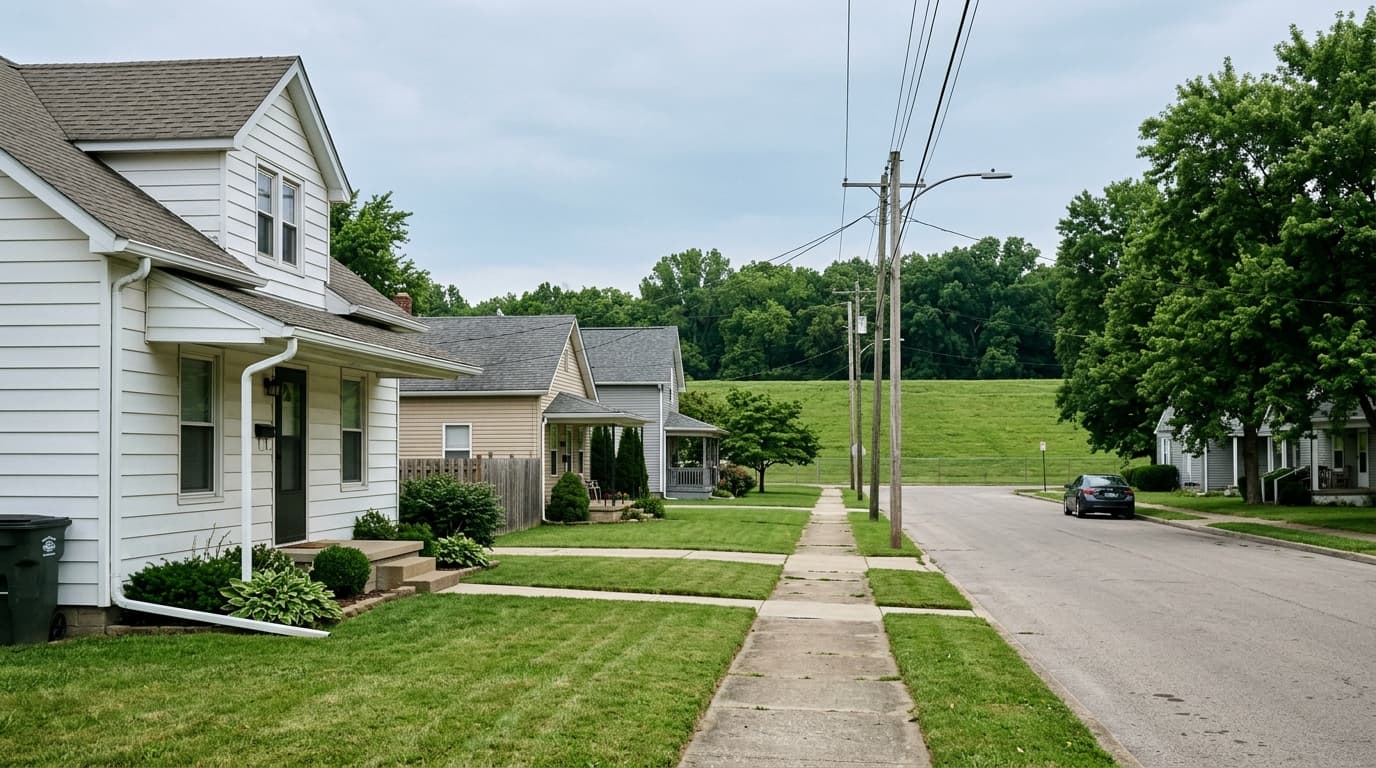
The Miami Valley has some of the most deliberate flood-control infrastructure in the country — dry dams, levees, and protected floodplains built after the catastrophic 1913 flood. None of it does anything about the water falling on your roof. Regional flood control protects Dayton from the rivers. Managing what comes off your own house is entirely on you, and it's the far more likely source of water in your basement.
In late March 1913, days of heavy rain on already-saturated ground sent the Great Miami and its tributaries through downtown Dayton. It remains one of the worst natural disasters in Ohio's history. What followed was remarkable: the region organized, funded, and built a flood-control system — the Miami Conservancy District, formed in the years after the flood, with a series of dry dams upstream and levees through the cities. It's the reason Dayton hasn't seen a repeat.
That history left the Miami Valley with a genuinely useful instinct about water: understand where it comes from, and give it somewhere to go before it decides for itself. It's the right instinct to apply to your own house.
The scale problem homeowners underestimate
An inch of rain on a 1,500-square-foot roof produces well over 900 gallons of water. A two-inch storm — routine in a Miami Valley summer — nearly doubles that. All of it arrives in an hour or two, and all of it leaves through a handful of downspouts.
That's a meaningful volume of water being deposited at four or five specific points around your foundation. If those points are right at the wall, you've built a small, repeating, self-inflicted flood.
Why the foundation is where it hurts
The soil against your foundation is not the same as the soil in your yard. It was excavated when the house was built and then backfilled, which leaves it permanently looser and more permeable than the undisturbed ground around it. Water finds that loose ring and travels down it to the footing.
From there it does the predictable things:
- Hydrostatic pressure builds against the wall and pushes water through any crack, joint, or block pore it can find.
- A sump pump runs constantly, which is a symptom, not a solution — the pump is managing water that shouldn't be arriving.
- Soil cycles wet and dry, and southwest Ohio's clay-heavy soils swell and shrink with it, working at the wall over the years.
- Erosion undercuts patios, walkways, and landscaping at each discharge point.
Where the Miami Valley's geography actually matters
Dayton's terrain is more varied than central Ohio's. The valley floor along the Great Miami, Mad, and Stillwater rivers is relatively flat and low, while communities like Kettering, Oakwood, Centerville, and Bellbrook sit on higher, rolling ground. That variety means the right drainage answer genuinely differs house to house.
- On low, flat ground near the rivers, the water table can be high and the ground stays saturated longer after a storm. Getting roof water away from the house matters more here, and there may be less room to daylight a drainage line at a meaningfully lower elevation.
- On sloped lots in the hillier suburbs, gravity is your friend for discharge — but you also have to think about what's uphill of you. A neighbor's downspout, driveway, or regraded yard can send surface water to your foundation regardless of what you do with your own.
- In older, denser neighborhoods, lots are narrow and there's simply less distance available between your downspout and someone else's property line.
Applying the 1913 lesson at house scale
The Conservancy District's approach was to slow water down upstream and give it a defined path. The residential version of that:
- Capture it properly. Gutters that are actually sized for the roof, with enough downspouts. An overflowing gutter is water that never entered the system at all — it's sheeting down your siding and landing in a concentrated line at the foundation.
- Move it decisively. Downspouts that discharge at least six feet out, and farther on flat lots. Buried solid pipe running to a daylight point at lower elevation is the durable answer when a lot allows it.
- Give it a destination. Water needs somewhere to end up — a swale, a lower area of the lot, a storm drain connection if your community permits it. "Away from the house" isn't a destination if it just spreads and returns.
- Grade the first several feet away from the foundation. Soil settles over the years and often ends up sloping back toward the wall. Correcting that is unglamorous and effective.
- Don't make it your neighbor's problem. On close lots this matters practically and legally. Discharging a concentrated stream onto adjoining property is how disputes start.
What flood control does and doesn't cover
Worth being clear, because these get conflated:
- Regional flood protection addresses river flooding. It's why Dayton's downtown and riverfront neighborhoods have been protected for over a century.
- Flood insurance covers rising surface water from outside the home, and is a separate policy from your homeowners insurance.
- Your homeowners policy typically covers sudden events, not gradual seepage traced to poor drainage or deferred maintenance.
- Roof runoff into your foundation falls into none of the above. It's a maintenance and drainage issue, which is another way of saying it's preventable.
Frequently Asked Questions
Does Dayton's flood control system protect my basement?
No. The Miami Conservancy District's dams and levees protect the region from river flooding — a different problem entirely from water in your basement. Most basement water in the Miami Valley comes from roof runoff and surface water collecting against the foundation, which is managed at the individual house with gutters, downspout discharge, and grading.
How far should downspouts discharge from a Dayton home?
At least six feet from the foundation, and farther on flat or low-lying lots near the rivers where the ground stays saturated. The discharge point should be lower than the foundation with consistent slope away from the house. On lots that allow it, a buried solid drainage line running out to daylight is the most reliable approach.
Why does my sump pump run constantly during Miami Valley storms?
Usually because roof water is being deposited right at the foundation. A 1,500-square-foot roof sheds over 900 gallons per inch of rain, and if the downspouts discharge at the wall, most of that goes into the loose backfill soil beside the foundation and straight to your drain tile. Extending discharge is often the fix, and it's far cheaper than any pump upgrade.
Get the water headed the right direction
If your Dayton-area home takes on water, your sump runs nonstop, or you've got erosion at the downspouts, the Zipco Gutters of Dayton team can look at the entire path — capacity, downspout count, discharge, and grade — across Dayton, Kettering, Beavercreek, Centerville, Xenia, and the rest of the Miami Valley. Reach out for a free estimate.
Get a free gutter quote in your city
Serving Cleveland, Columbus, and Dayton with seamless aluminum gutters, written quotes, and a workmanship warranty.