
Buying or Selling in Dayton? The Gutter Issues That Show Up on Inspection Reports
Gutters and drainage are among the most flagged items in home inspections. What Dayton-area buyers and sellers should expect — and fix before it costs the deal.
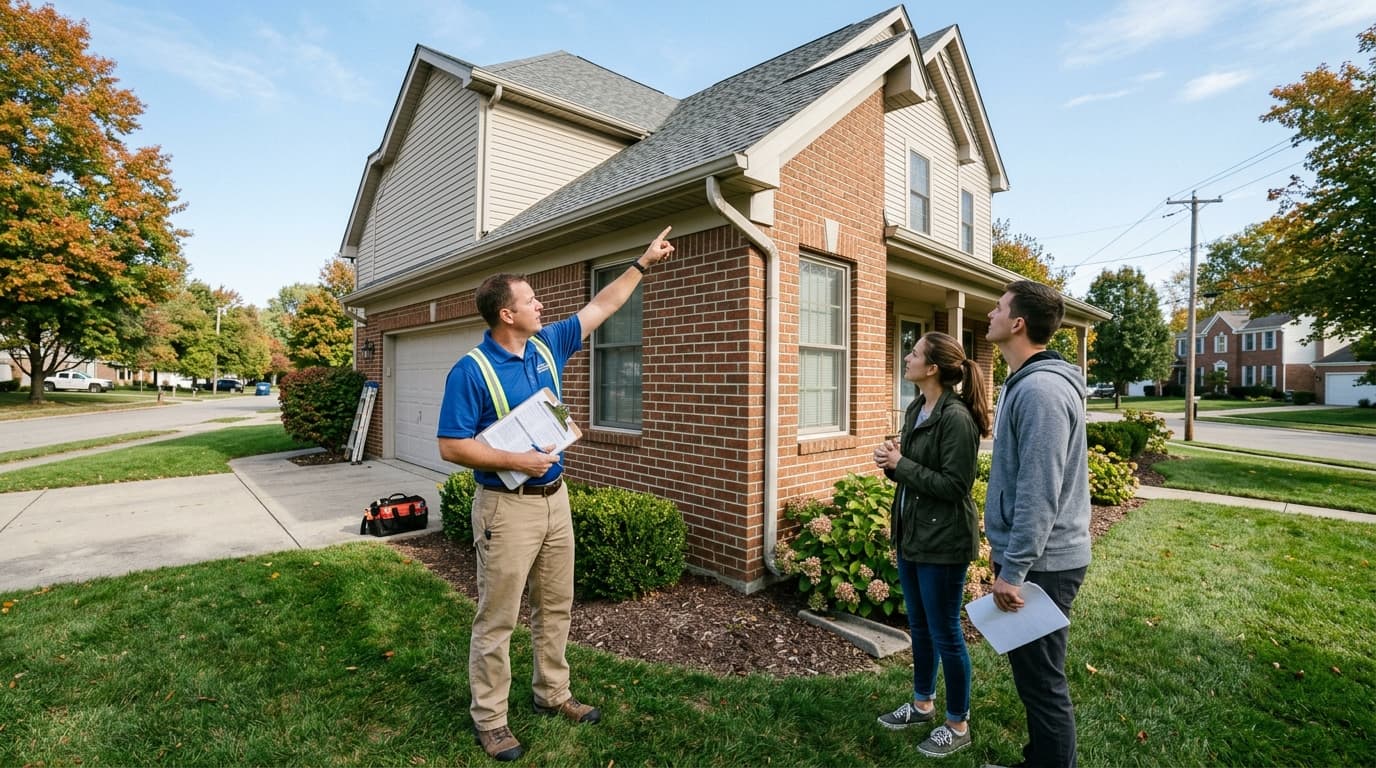
Gutters and exterior drainage are among the most commonly flagged items on a home inspection report, and the ones most likely to become a negotiation point — because an inspector who sees water directed at the foundation will say so plainly, and buyers read that as basement risk. The fixes are usually modest. The leverage a buyer gets from an unaddressed one rarely is.
The Dayton area has an unusually steady flow of home transactions relative to its size, driven in part by Wright-Patterson Air Force Base — one of the largest single-site employers in Ohio — and the constant cycle of military and civilian relocations that comes with it. That means a lot of Miami Valley homes get inspected by out-of-town buyers on tight timelines, working from a report rather than long familiarity with the house.
What inspectors actually write up
Home inspectors follow the water. These are the gutter-related items that show up again and again on Dayton-area reports:
Downspouts discharging at the foundation
The most common finding, and the one with the most standardized language: "Downspout extensions recommended to direct water away from the foundation." It appears whether or not there's any evidence of a problem, because it's a known risk factor. Inexpensive to fix and it removes an easy negotiating point.
Gutters full of debris
An inspector who can see leaves and sludge from a ladder will note it, often paired with a comment about deferred maintenance generally. Debris in the gutter primes a buyer to wonder what else hasn't been done.
Sagging, loose, or improperly pitched gutters
Visible from the ground. A run with a belly, a gap at the fascia, or a downspout hanging off its elbow gets written up as a functional defect, not just cosmetic.
Rotted or damaged fascia and soffit
This is the finding that gets expensive. Soft, stained, or visibly deteriorated fascia signals long-term water intrusion, and inspectors will often recommend further evaluation — which buyers hear as "there might be more behind it." On the older housing stock in Dayton proper, Riverside, and West Carrollton, this is a frequent flag.
Missing or improper drip edge
Common on homes built before drip edge became standard practice. Water running behind the gutter is exactly what causes the fascia rot above.
Grading sloping toward the house
Not strictly a gutter item, but it lands in the same section of the report and usually shares a cause. Settled soil against the foundation directing water back at the wall is a standard write-up.
Evidence of past or present basement water
Efflorescence on block walls, staining, a sump pump with a visible high-water line. Inspectors report what they see, and the exterior drainage findings become the explanation for it.
If you're selling
The strategic point is that these items cost far less to fix beforehand than to concede afterward. A buyer negotiating on a report doesn't ask for the cost of the repair — they ask for a credit sized to their uncertainty about what the repair might uncover.
A reasonable pre-listing pass:
- Clean the gutters and flush the downspouts. Cheap, and it removes the "deferred maintenance" impression from the report.
- Add or replace downspout extensions so every one discharges at least six feet out. This is the highest-leverage $100 you'll spend on the listing.
- Fix obvious sags and loose sections. Re-secure hangers, correct pitch, reattach downspouts.
- Address visible fascia damage rather than painting over it. Painted-over rot is worse than visible rot on an inspection report, because it reads as concealment.
- Check the grade at the foundation and correct any spots sloping back toward the house.
- Keep receipts. Documented recent work answers the question before it's asked.
If your gutters are genuinely at end of life, replacement before listing is worth considering. New seamless gutters present well in photos, they eliminate a whole section of the report, and they're a concrete answer to any water concern the inspection raises.
If you're buying
Read the exterior drainage section carefully, and separate the cosmetic from the consequential:
- Downspout extensions and dirty gutters are minor. Fix them yourself after closing; they're not worth much leverage.
- Sagging runs and loose sections are moderate — a repair, not a replacement, in most cases.
- Fascia and soffit damage is the one to take seriously. It means water has been getting in for a long time, and the visible damage is often not all of it. Ask for further evaluation before you decide what it's worth.
- Basement water evidence plus poor exterior drainage is a solvable combination, and often a good one to buy — the drainage fix frequently resolves the basement issue, which means you can negotiate on the scarier-sounding problem and fix the cheap cause.
Walk the property yourself in the rain if you get the chance. Ten minutes watching where water actually goes tells you more than any report.
What's specific to the Dayton market
- Housing eras vary widely. Century homes in Oakwood and Dayton proper, postwar ranches across Kettering, Centerville, and Huber Heights, and newer construction in Springboro and Beavercreek — each with a different characteristic set of findings.
- Storm history matters. Southwest Ohio's severe weather means hail and wind damage show up on reports, and an inspector noting dented gutters may be pointing at roof damage worth investigating.
- Relocating buyers are working remotely. Many WPAFB-related purchases happen with the buyer out of state, relying entirely on the report. That raises the weight of every written finding, which is another argument for sellers to clear them in advance.
Frequently Asked Questions
Do home inspectors check gutters in Ohio?
Yes. Gutters, downspouts, and exterior drainage are a standard part of a general home inspection, and they're among the most frequently flagged items. Inspectors typically note debris, sagging, improper pitch, downspouts discharging near the foundation, and any fascia or soffit damage visible from a ladder.
Should I replace my gutters before selling my Dayton home?
Replace them if they're genuinely at end of life — repeatedly resealed seams, sagging runs, or damaged fascia. If they're just dirty or missing extensions, a cleaning and a set of extensions handles it for a fraction of the cost. The goal is to keep drainage findings off the report, since buyers negotiate against uncertainty rather than against the actual repair cost.
How much do gutter problems affect a home sale?
The direct repair cost is usually modest, but the negotiating impact can be larger, because drainage findings raise the question of foundation and basement water. Fascia and soffit damage carries the most weight — it signals long-term water intrusion and often prompts a request for further evaluation, which can stall a closing.
Get ahead of the report
Whether you're listing a home in Kettering, buying in Beavercreek, or relocating to Fairborn on a short timeline, the Zipco Gutters of Dayton team can assess, repair, or replace gutters quickly and give you a written scope you can hand to the other side of the table. Reach out for a free estimate.
Get a free gutter quote in your city
Serving Cleveland, Columbus, and Dayton with seamless aluminum gutters, written quotes, and a workmanship warranty.