
Storm Season in the Miami Valley: What Hail and Wind Do to Dayton Gutters
Dayton sits in an active severe-weather corridor. How to spot hail and wind damage on your gutters after a Miami Valley storm — and what to do next.
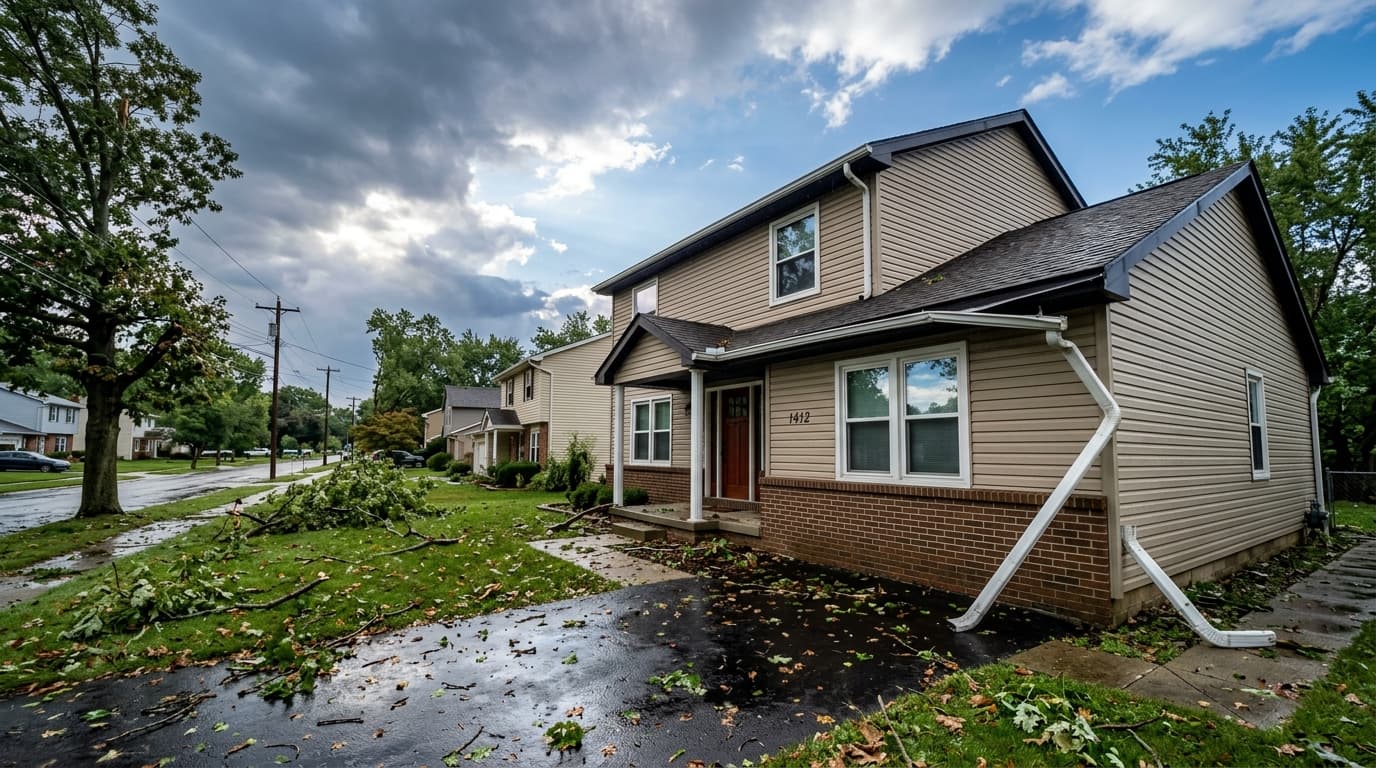
After a severe Miami Valley storm, walk your property and look for four things: dents and dimples in the gutter face, sections pulled loose or hanging at the fascia, downspouts knocked off their elbows, and granule sludge washed into the trough from the roof. Any one of them means the storm did more than make noise, and the time to find out is in the days after — not the following spring when the fascia is already soft.
Southwest Ohio sits in an active corridor for severe thunderstorms, damaging straight-line winds, hail, and — as the region learned in the Memorial Day 2019 outbreak — tornadoes. Dayton-area homeowners get more of this weather than most of the state, and gutters are among the first parts of the house to take it. They're thin aluminum hanging off the roof edge, fully exposed on every side.
What hail does to a gutter
Hail damage on gutters is usually cosmetic-looking and structurally meaningful at the same time.
The signs
- Dents and dimples across the flat front face of the gutter, most visible in low-angle light in the early morning or late afternoon.
- Bright spots or scuffs where the baked-on enamel finish has been chipped, exposing bare aluminum. Those spots will oxidize and streak.
- Dents on the tops of downspouts and elbows — often the clearest evidence, because those surfaces face straight up.
- Granules in the gutter. A layer of sandy roof grit in the trough after a hailstorm means your shingles took a beating too, and that's a roofing conversation as much as a gutter one.
Why it matters beyond looks
Lighter builder-grade aluminum (.027 gauge) dents easily, and a deformed trough doesn't carry water the way a straight one does — dents create low spots that hold standing water, and standing water is how you get corrosion, mosquito breeding, and premature failure at the seams. Chipped finish accelerates all of it.
What wind does to a gutter
Wind damage is less subtle but easier to overlook from the ground.
- Sections pulled away from the fascia. Look along the roof edge for a gap between the back of the gutter and the board it hangs on. Even a small gap sends water behind the gutter and into the wood.
- Sagging or waving runs. Gutters should sight straight with a slight, even pitch. A dip means a hanger let go.
- Detached downspouts. Wind grabs downspouts easily, especially the lower sections and extensions. A downspout blown off its elbow dumps the whole roof's water at your foundation.
- Debris load. Straight-line winds in the Miami Valley routinely drop branches, and a limb sitting in a gutter both blocks flow and bends the trough under its own weight once it fills with rain.
- Torn or lifted drip edge. If the metal at the roof edge has lifted, water runs behind the gutter every time it rains.
The 48-hour checklist after a Dayton storm
You don't need to climb anything for most of this. Do it while the damage is fresh and clearly connected to a dated weather event.
- Walk the full perimeter and photograph anything that looks wrong, from multiple angles, with something for scale.
- Sight down each gutter run from the corners of the yard, looking for sags, gaps, and separated seams.
- Check every downspout at the top connection, at each elbow, and at the discharge end.
- Look at the ground. Fresh erosion trenches, washed-out mulch, or a puddle against the foundation tells you water went somewhere it shouldn't.
- Check the basement or crawlspace for new dampness along the wall below any suspect downspout.
- Note the date and the storm. Insurance claims live or die on tying damage to a specific event.
Save the ladder work for someone equipped for it. Roof edges after a storm are wet, debris-strewn, and structurally uncertain.
When it's an insurance matter
Homeowners policies generally cover sudden storm damage — hail and wind — while excluding wear, rust, and neglected maintenance. That distinction is exactly why documenting the storm date matters. A few practical points:
- Cosmetic-only hail dents are handled differently by different carriers, and some policies carry cosmetic-damage exclusions. Read yours before assuming.
- Get a written, itemized assessment from a contractor before you file, so you know whether the damage clears your deductible at all. In the Dayton market, wind and hail deductibles are sometimes higher than your standard one.
- Be careful with storm-chasing crews. After a major Miami Valley storm, out-of-state trucks show up in force. Anyone pressuring you to sign on the spot, offering to "cover your deductible," or unwilling to give you a written scope with a local address is a problem waiting to happen.
Preventive choices that hold up better
If you're replacing gutters in the Dayton area anyway, storm exposure should shape the spec:
- .032-gauge aluminum instead of .027. It resists denting and holds shape under both hail and ice.
- Hidden hangers every two feet, screwed into solid fascia — not old-style spikes, which back out under wind load and thermal cycling.
- 6-inch gutters with 3x4 downspouts on larger roofs. Southwest Ohio's storms deliver a lot of water in a very short time, and capacity is what keeps it in the trough.
- Seamless runs, which remove the joints that storm flexing tends to open first.
- Secured downspout extensions that won't blow off and won't get "temporarily" removed by a mower and never put back.
Frequently Asked Questions
How do I know if hail damaged my gutters in Dayton?
Look at the flat front face of the gutter and the upward-facing tops of the downspouts and elbows in low-angle morning or evening light — dents and dimples show clearly then. Chipped finish spots and a layer of shingle granules washed into the trough are two more reliable signs, and granules also suggest your roof took damage.
Does homeowners insurance cover storm damage to gutters in Ohio?
Typically yes for sudden wind and hail damage, and typically not for rust, age, or damage traced to neglected maintenance. Coverage details vary by policy, and some carriers treat cosmetic hail dents differently or apply a separate wind/hail deductible — so get a written contractor assessment before deciding whether filing makes sense.
What should I do first after a severe storm in the Miami Valley?
Photograph everything within a day or two while the damage is clearly tied to a dated storm, walk the perimeter looking for gaps at the fascia and detached downspouts, and check the ground and basement for new water. Then get a written assessment from an established local contractor before signing anything with a door-knocking crew.
After the storm, get a straight assessment
If a storm has come through Dayton, Kettering, Beavercreek, Centerville, Xenia, or anywhere else in the Miami Valley, the Zipco Gutters of Dayton team will inspect what actually happened and give you an honest, written scope — including telling you when the answer is "this is fine." Reach out for a free estimate.
Get a free gutter quote in your city
Serving Cleveland, Columbus, and Dayton with seamless aluminum gutters, written quotes, and a workmanship warranty.