
DIY vs. Professional Gutter Cleaning: What's Right for Your Ohio Home?
DIY or hire a pro for gutter cleaning in Ohio? An honest breakdown for Cleveland, Columbus & Dayton homeowners — safety, cost, timing, and when to call.
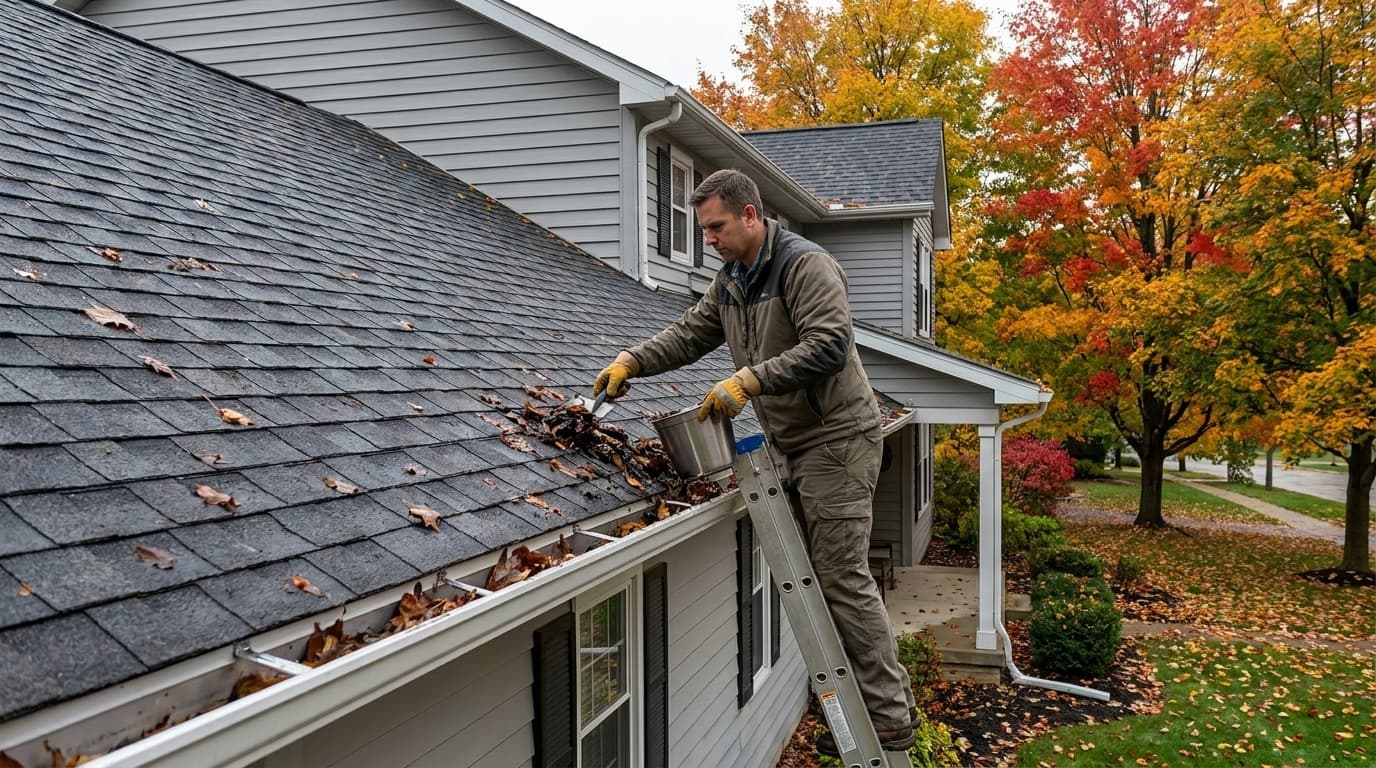
For a single-story ranch with a low roof and light tree cover, DIY gutter cleaning is a reasonable weekend job — but for two-story homes, steep pitches, or heavy leaf load, hiring a professional is safer and usually a better value. The honest deciding factors aren't just money; they're your roof height, your comfort on a ladder, and how much your Ohio trees drop each fall. Get those three right and the choice makes itself.
Every Cleveland, Columbus, and Dayton homeowner faces this question at least twice a year — once in late fall after the leaves come down, and again in spring after the seeds, buds, and storm debris pile up. Ohio's tree canopy is generous, which is lovely in July and a maintenance chore in November. Clogged gutters are the single most common cause of fascia rot, foundation moisture, and ice-dam damage across the state, so this isn't a task you can skip. The only real question is whether you do it yourself or bring in a crew.
The real trade-offs: DIY vs. professional
Both approaches get the gutters clean. What differs is the risk you take on, the time it costs you, and what else gets inspected while someone is up there.
What DIY actually involves
Cleaning your own gutters is straightforward on paper: scoop the debris, bag it, flush the runs with a hose, and confirm the downspouts drain. In practice, it's a few hours of ladder work, repeated repositioning, and hauling wet leaf muck. You'll need:
- A sturdy extension ladder rated for your weight plus tools
- A ladder stabilizer so you're not resting on the gutter itself
- Work gloves, a gutter scoop or trowel, and a bucket
- A garden hose with a spray nozzle
- A spotter on the ground — never skip this
What a professional brings
A professional crew shows up with the ladders, the fall-protection gear, and the experience to move quickly and safely. Beyond the cleaning itself, a good Ohio gutter tech will flag problems while they're up there: loose hangers, seam leaks, early fascia softening, a downspout that isn't draining, or a section pulling away from the house. That inspection is often worth as much as the cleaning.
When DIY makes sense
DIY is a fair call when all of these are true:
- Your home is single-story with a low, walkable roofline and a manageable ladder reach.
- You're steady and confident on a ladder and have someone to spot you.
- Tree cover is light to moderate — a couple of maples, not a wooded lot.
- Your gutters are in good shape and just need debris removed, not repair.
- You own the right gear or are willing to buy it once and reuse it.
If that describes your house, cleaning your own gutters two or three times a year is a legitimate way to save money and keep an eye on your home.
When to hire a professional
Bring in a pro when any of these apply:
Your home is two stories or has a steep pitch
This is the big one. The Consumer Product Safety Commission tracks hundreds of thousands of ladder-related injuries every year, and cleaning gutters on a tall or steep roof is exactly the scenario where falls happen. A twenty-minute savings isn't worth a broken wrist or worse.
You have heavy tree cover
Homes tucked under mature oaks, maples, or pines fill their gutters fast — sometimes needing three or four cleanings a year. At that volume, a professional visit on a schedule is more efficient than repeatedly dragging out the ladder.
You suspect something's wrong
If water has been overflowing, if you've seen staining on the fascia, or if a downspout isn't draining, you want trained eyes up there, not just clean troughs. A pro can tell you whether you have a cleaning problem or a repair problem.
You physically can't or shouldn't
Age, balance, a bad knee, or simple discomfort with heights are all perfectly good reasons to hand this off. There's no prize for climbing a ladder you're not sure about.
Timing: when Ohio gutters need cleaning
Regardless of who does the work, Ohio homes generally need cleaning:
- Late fall (November) — after the bulk of the leaves have dropped. This is the most important cleaning of the year because clogged gutters going into winter are the leading cause of ice dams.
- Spring (April–May) — to clear winter debris, maple seeds ("helicopters"), buds, and pollen catkins that pack down into a dense mat.
- After major storms — Ohio's summer thunderstorms and wind events drop branches and shingle grit that can block a downspout in a single afternoon.
Homes with heavy tree cover often need a mid-fall pass in October as well.
A note on gutter guards
If you're tired of this decision entirely, quality gutter guards dramatically reduce how often the gutters need attention. They don't make cleaning obsolete — guards still need occasional maintenance — but they turn a three-times-a-year chore into a once-a-year check. For homeowners on wooded lots or those who've decided ladder work isn't for them anymore, guards are often the more sensible long-term answer than repeatedly weighing DIY against hiring out.
Regional notes for Cleveland, Columbus, and Dayton
Cleveland
Cleveland's freeze-thaw cycles and lake-effect snow make the late-fall cleaning non-negotiable. Gutters that head into a Cleveland winter clogged are far more likely to form ice dams that push water back under the shingles and onto the fascia. If you clean your own, get it done before the first hard freeze — often earlier here than further south.
Columbus
Columbus neighborhoods like Clintonville, Worthington, and Upper Arlington are heavily wooded with mature trees, which means faster clogging and more frequent cleanings. Central Ohio's long summer storm season also drops a steady stream of debris, so a spring-and-fall rhythm is the minimum for most Columbus homes.
Dayton
Dayton's storm and wind exposure means gutters here collect not just leaves but shingle grit, small branches, and wind-blown debris after severe weather. A post-storm walk-around is worth building into your routine, and two-story Dayton homes in older neighborhoods are prime candidates for professional cleaning given the ladder heights involved.
Frequently Asked Questions
Is it safe to clean my own gutters on a two-story Cleveland home?
For most Cleveland homeowners, cleaning a two-story home's gutters yourself carries real fall risk, especially on the steep or icy conditions common here. If you don't have proper ladder equipment, a stabilizer, and a spotter, hiring a professional is the safer and often smarter choice for taller homes.
How often should Columbus homeowners clean their gutters?
Most Columbus homes need cleaning at least twice a year — late fall and spring. Homes in heavily wooded central Ohio neighborhoods like Clintonville or Worthington often need three or four cleanings a year, plus a check after major summer storms.
Does professional gutter cleaning in Dayton include an inspection?
Most reputable Dayton gutter cleaners will flag issues they spot while working — loose hangers, seam leaks, fascia softening, or storm damage. Given Dayton's storm exposure, that inspection value is a real reason many homeowners prefer hiring a pro over doing it themselves.
Let's keep your gutters clear
Whether you want a one-time professional cleaning, a seasonal schedule, or an honest opinion on whether guards would save you the hassle, the Zipco Gutters team serves homeowners across Cleveland, Columbus, and Dayton. We're glad to take a look and give you a straight recommendation — no pressure.
Get a free gutter quote in your city
Serving Cleveland, Columbus, and Dayton with seamless aluminum gutters, written quotes, and a workmanship warranty.