
Mosquitoes and Standing Water: Why Summer Gutter Care Matters in Ohio
Clogged gutters breed mosquitoes in Ohio summers. Here's why standing water matters for Cleveland, Columbus & Dayton homes — and how to stop it.
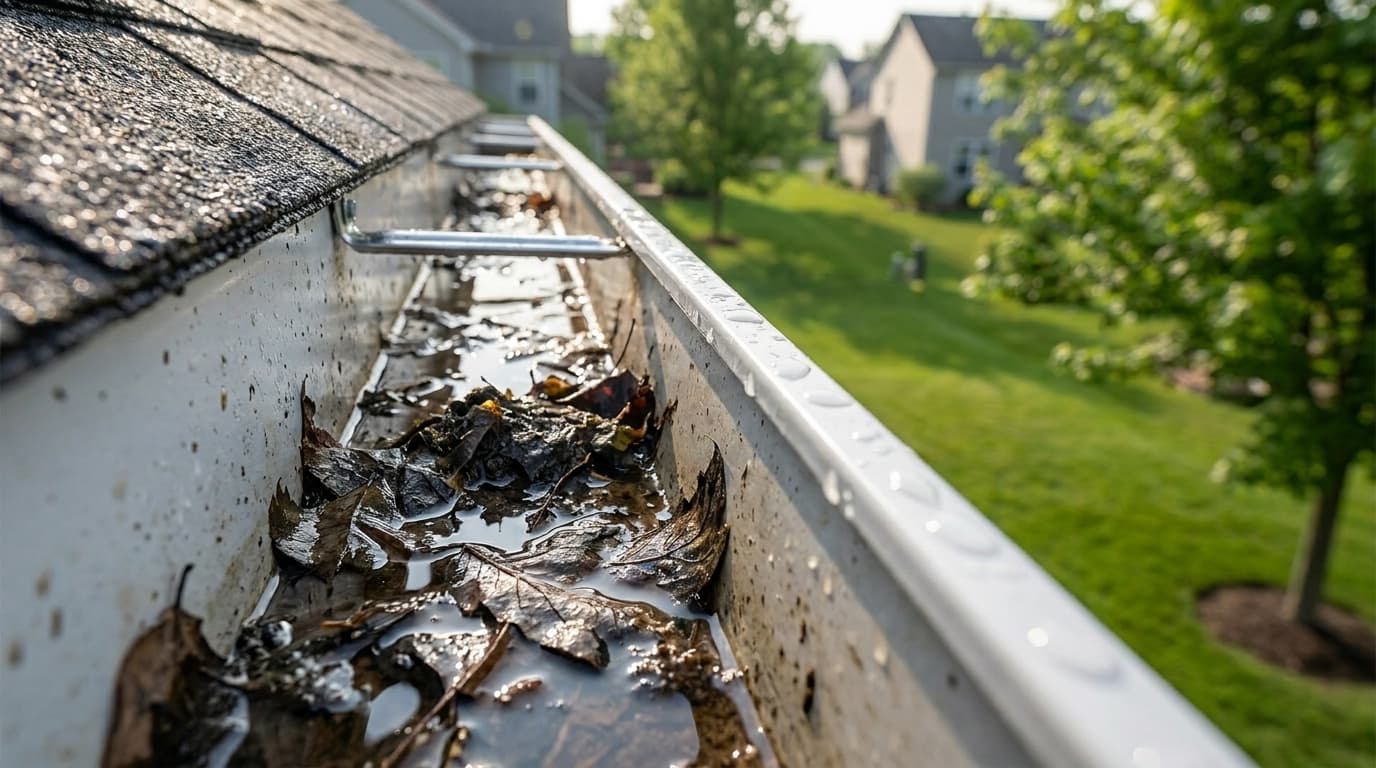
Clogged gutters are one of the most common mosquito breeding grounds around an Ohio home, because standing water trapped by leaves and debris gives mosquitoes everything they need to multiply in as little as a week. A single blocked gutter run can hatch thousands of mosquitoes over a summer. The fix is simple and it's the same everywhere in Cleveland, Columbus, and Dayton: keep water moving through your gutters instead of pooling in them.
Ohio summers are warm, humid, and wet — a near-perfect climate for mosquitoes. Homeowners spend money on yard sprays and citronella while the actual nursery sits ten feet overhead in a gutter nobody has looked in since spring. Understanding how standing water forms up there, and why it matters beyond just the itch, is the first step to a more comfortable backyard.
Why gutters are a mosquito magnet
Mosquitoes don't need much. Females lay eggs in still, stagnant water, and several common species need only a few tablespoons to complete the cycle. A clogged gutter delivers exactly that.
The breeding math is fast
In the heat of an Ohio July, many mosquito species go from egg to biting adult in about 7 to 10 days. That means a gutter that clogs after a June storm can be producing adult mosquitoes before the Fourth of July — and keep producing them every week the water sits.
What turns a gutter into a nursery
- Leaf and seed debris dams up the flow, especially near downspouts and corners.
- Improper slope leaves low spots where water pools even in a clean gutter.
- Sagging sections create bellies that never fully drain.
- Blocked downspouts back water up the entire run.
- Shingle grit and roof sediment build a soft sludge that holds moisture between rains.
The tell-tale sign is standing water 24 to 48 hours after a rain has stopped. A healthy gutter should be empty and dry by then.
The problem isn't just the bites
Mosquitoes are the headline, but standing water in your gutters causes a cascade of other issues that cost far more than a bug bite.
Health and comfort
Beyond making your yard miserable, mosquitoes in the Midwest can carry West Nile virus, which Ohio sees cases of most summers. Reducing standing water around your home is one of the most effective, least chemical-heavy ways to cut your exposure.
Structural damage
Water that sits in a gutter is water that's working against your house. It adds weight that stresses hangers and fascia, keeps the fascia board and soffit constantly damp, and accelerates rot and corrosion. A gutter full of wet sludge in July is a gutter that sags and fails by winter.
Other pests follow the water
Standing water and decaying leaf matter also attract other unwelcome guests — from carpenter ants and wasps drawn to damp wood to birds and rodents nesting in the debris. The gutter becomes an ecosystem instead of a drainage system.
Summer gutter care that actually works
You don't need to become a roofer. A handful of habits keeps water moving all season.
1. Clean out spring debris before peak mosquito season
Ohio's maple seeds (the "helicopters"), oak catkins, and early leaf drop pile up in late spring. Clearing that debris in late May or June — before the hottest, wettest weeks — removes the dams before mosquitoes get going.
2. Do a mid-summer check after big storms
Columbus and Dayton thunderstorms dump leaves, twigs, and roof grit into gutters in minutes. A quick look after a major storm catches new blockages before they can hold water for a full breeding cycle.
3. Confirm your downspouts are actually flowing
Run a hose into the gutter and watch the downspout. Weak or no flow means a clog down the tube. Water should exit briskly and get carried away from the foundation, not puddle at the base.
4. Check for standing water 48 hours after rain
This is the single best diagnostic. If water is still sitting in the trough two days after the sky cleared, you have a slope problem, a sag, or a clog — and a mosquito nursery.
5. Consider gutter guards to keep debris out
Quality gutter guards keep the leaves and seeds that cause standing water out of the trough in the first place. They're the closest thing to a permanent fix for the clog-and-breed cycle, and they cut down on how often anyone has to be on a ladder.
A quick homeowner walk-around
Twice a summer, take five minutes and do this:
- Look up at each gutter run for sagging, overflow stains, or plant growth (yes, plants grow in neglected Ohio gutters).
- After the next rain, note any section still holding water two days later.
- Test each downspout for strong flow.
- Check the ground below downspouts for puddling near the foundation.
- If you see standing water anywhere, clear it — or call someone who can.
Regional notes for Cleveland, Columbus, and Dayton
Cleveland
Cleveland's lake-influenced humidity keeps gutters damp longer between rains, which extends how long standing water lingers and how long mosquitoes have to breed. Neighborhoods with mature trees near the lake tend to load gutters heavily with debris — mid-summer checks matter most here.
Columbus
Columbus sees frequent, heavy summer thunderstorms that both flush and re-clog gutters in the same week. Central Ohio's warm, wet July and August are peak breeding conditions, so a post-storm gutter glance goes a long way toward a bite-free backyard.
Dayton
Dayton combines high summer humidity with storm-driven debris, giving mosquitoes both the water and the warmth they need. Low-lying southwest Ohio yards already fight standing water at ground level, so eliminating the source up in the gutters removes one nursery you can actually control.
Frequently Asked Questions
Can clogged gutters really cause a mosquito problem at my Cleveland home?
Yes — a clogged gutter holding standing water is one of the most common mosquito breeding sites at Cleveland homes. With the area's summer humidity keeping gutters damp, even a small pool can hatch mosquitoes within a week or two. Clearing the debris usually makes a noticeable difference in your yard.
How often should I check my gutters for standing water in Columbus during summer?
In Columbus, check after every major summer thunderstorm and at least once mid-season. Central Ohio's frequent storms re-clog gutters quickly, so a two-minute look after big rains — plus confirming no water is sitting 48 hours later — keeps mosquitoes from getting a foothold.
Will gutter guards help with mosquitoes at my Dayton home?
They help significantly. By keeping leaves and seeds out of the trough, quality gutter guards prevent the debris dams that trap standing water, which is what mosquitoes breed in. In humid Dayton summers, that's one of the more effective ways to reduce breeding sites you don't have to keep re-cleaning.
Keep the water moving this summer
If your Cleveland, Columbus, or Dayton gutters are holding water long after the rain stops, the Zipco Gutters team can clean, re-slope, or guard them so water flows the way it should. Reach out for a free estimate and take the mosquito nursery off your roof.
Get a free gutter quote in your city
Serving Cleveland, Columbus, and Dayton with seamless aluminum gutters, written quotes, and a workmanship warranty.