
Living Under Ohio's Trees: Gutter Care for Heavily Wooded Lots
Heavily wooded Ohio lot? Trees mean constant gutter debris. A care guide for Cleveland, Columbus & Dayton homeowners under the canopy.
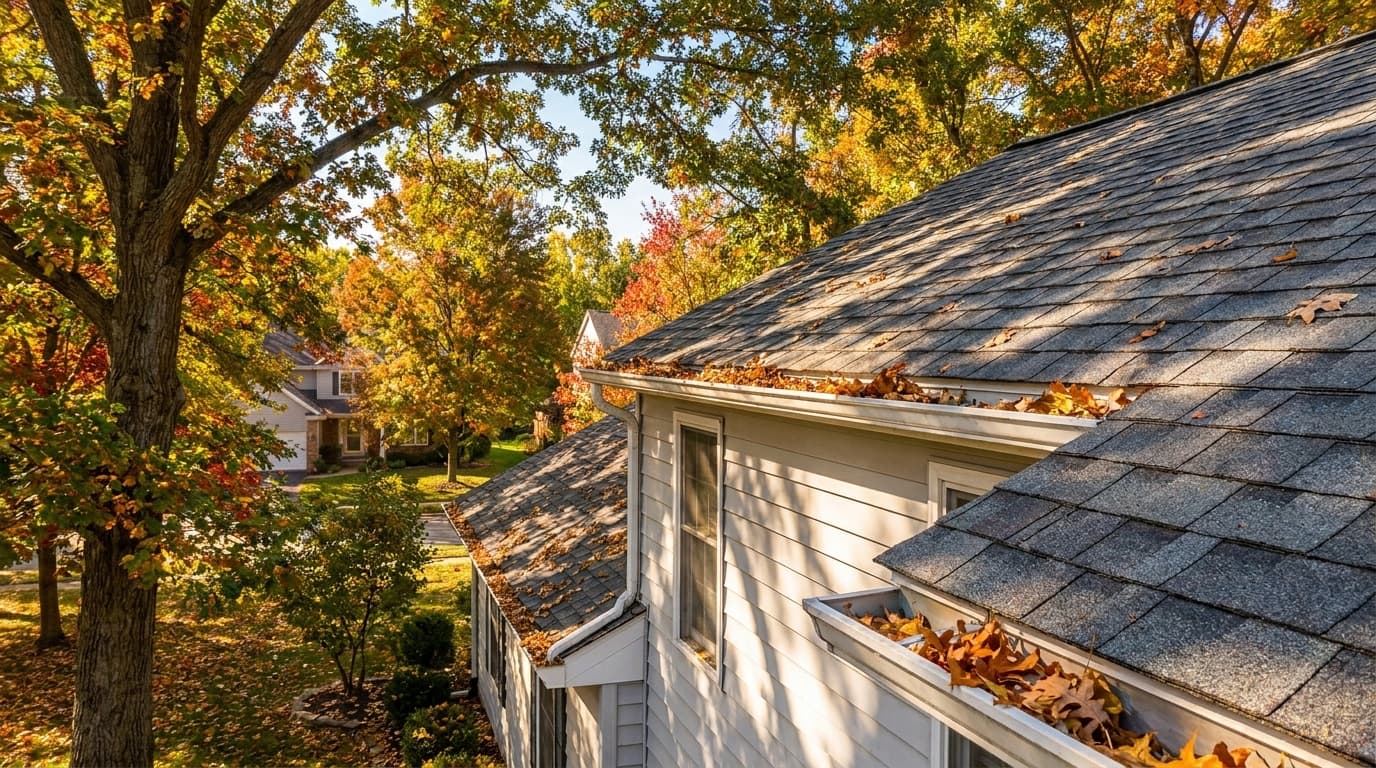
If your Ohio home sits under mature trees, plan on cleaning your gutters at least three to four times a year instead of the usual twice, and seriously consider gutter guards — because a heavily wooded lot drops leaves, seeds, twigs, and needles into your gutters almost constantly from spring through late fall. The shade and privacy are worth it, but the debris load is real. Homeowners in wooded pockets of Cleveland, Columbus, and Dayton fight clogs their neighbors on open lots never think about.
Ohio's tree canopy is one of the best things about its older suburbs — the oaks of Shaker Heights, the maples of Upper Arlington, the sycamores along Dayton's river corridors. But every one of those beautiful trees is a debris machine aimed at your roof. Managing that reality is less about working harder and more about working smarter: the right cleaning schedule, the right guards, and knowing which trees cause which problems.
Why wooded lots are a different game
A home on an open lot gets a light dusting of debris. A home under a canopy gets a steady rain of organic material for eight months a year, and it arrives in waves that most homeowners underestimate.
The debris arrives in seasons, not once
- Early spring: Maple seeds ("helicopters"), oak catkins, buds, and flower tassels. This is a huge and often-ignored load.
- Summer: Twigs, bark, small branches from storms, and seed pods.
- Fall: The big leaf drop — the season everyone expects.
- Winter: Needles from pines and spruces keep falling, and bare-branch twigs break loose in wind and ice.
The takeaway: if you only clean gutters in November, you've already had clogs since April.
The debris is heavier and stickier
Wet leaves and seed pods pack into a dense, sludgy mat that holds water, adds weight to the gutter, and resists a casual scoop. Pine needles are worse — they weave through many types of gutter guards and knit into a mat that blocks flow while looking deceptively clean.
The right cleaning rhythm for a canopy lot
Twice a year is the standard advice for open lots. Under trees, build your schedule around the debris seasons instead.
A realistic schedule
- Late spring (late May–June): Clear the spring seed-and-catkin load before summer storms wash it into dams.
- Mid-fall (October): A first pass once the early leaves drop.
- Late fall (mid-to-late November): The main cleaning after the canopy is mostly bare — the most important one of the year.
- After major storms, year-round: Wooded lots get twigs and branches knocked down by wind; a quick check prevents a single storm from clogging everything.
Homes under especially heavy or messy trees — silver maples, oaks, pines — may need a fifth visit. It sounds like a lot, but each cleaning is cheaper and faster than the fascia rot, foundation water, and pest problems that clogged gutters cause.
Gutter guards: close to essential under a canopy
On an open lot, gutter guards are a nice convenience. Under a heavy canopy, they're closer to a necessity — the difference between cleaning four times a year and occasionally brushing debris off the top.
What to know before choosing guards
Not all guards handle heavy tree debris equally:
- Perforated aluminum panels keep leaves, needles, and seed pods on top while water drains through, and because air moves above and below the panel, debris dries out and blows off instead of matting down.
- Fine micro-mesh blocks the small stuff, but on a canopy lot the fine screen tends to blind over with shingle grit and pollen, and wet debris mats on the surface.
- Reverse-curve guards shed leaves well but can struggle with fine seeds and needles.
- Screen and foam guards are cheaper but tend to clog or trap needles on pine-heavy lots.
For a genuinely wooded Ohio lot with mixed hardwoods and evergreens, a perforated aluminum panel is usually the most reliable choice — it's what we install as Zipco Leaf Shield, precisely because it doesn't depend on a fine screen staying clean. Whatever the type, guards reduce the frequency and danger of cleaning — they don't eliminate maintenance entirely, and any contractor who promises "never clean again" is overselling.
Size matters too
Heavily wooded lots benefit from 6-inch gutters with 3x4 downspouts. The larger trough gives debris more room to move toward the downspout instead of damming, and the wider downspout is far less likely to plug with a wad of wet leaves.
Managing the trees themselves
Gutter care under a canopy also means a little tree care.
- Trim branches back from the roofline — ideally several feet of clearance. Overhanging limbs deliver debris directly into the gutter and scrape shingles in the wind.
- Prioritize the messy species. If a single silver maple or pine is responsible for most of your clogs, focused trimming there pays off.
- Keep the roof valleys clear. Debris that collects in valleys washes straight into the gutters below during the next rain.
A word of safety: keep tree work and roof-height gutter work to people equipped for it. Ladders around mature trees on uneven, shaded, often-damp ground are where a lot of homeowner injuries happen.
Regional notes for Cleveland, Columbus, and Dayton
Cleveland
Cleveland's east-side suburbs — Shaker Heights, Cleveland Heights, Chagrin Falls — are famous for their mature tree canopy, which means heavy, sustained debris loads and serious fall cleanups. Combine that with lake-effect moisture and ice, and clogged gutters here turn into ice-dam and fascia problems fast. Guards and a disciplined schedule matter most in these older, tree-lined neighborhoods.
Columbus
Established Columbus areas like Clintonville, Bexley, and Upper Arlington sit under decades-old oaks and maples that drop heavily in both spring and fall. Central Ohio's frequent summer storms also knock down twigs and branches, so wooded-lot homeowners here benefit from post-storm checks on top of seasonal cleanings.
Dayton
Dayton's river-corridor and older-suburb lots often feature large sycamores, silver maples, and pines, all heavy debris producers. Add southwest Ohio's storm exposure, and wooded Dayton properties see both steady leaf load and sudden storm-debris dumps — a strong case for 6-inch gutters and quality guards.
Frequently Asked Questions
How often should I clean gutters on a wooded lot in Cleveland?
On a heavily wooded Cleveland lot, plan on three to four cleanings a year — late spring, mid-fall, and a key late-fall pass after the canopy is bare — plus quick checks after major storms. The east-side tree canopy and lake-effect moisture make skipping cleanings especially risky for ice dams and fascia rot.
Are gutter guards worth it for a tree-heavy property in Columbus?
For most tree-heavy Columbus properties, yes. A quality perforated aluminum guard dramatically cuts how often you're on a ladder and keeps maple seeds and oak debris out of the trough, while airflow over and under the panel lets what lands on top dry and blow away. They don't end maintenance entirely, but on a canopy lot they turn a four-times-a-year chore into occasional light upkeep.
What kind of gutters handle heavy tree debris best on a Dayton home?
On a wooded Dayton lot, 6-inch seamless gutters with 3x4 downspouts paired with a perforated aluminum guard handle debris best. The larger trough and downspout let leaves and seed pods move toward the drain instead of damming, which matters a lot given Dayton's mix of heavy trees and storm-driven debris.
Living well under the canopy
If your Cleveland, Columbus, or Dayton home sits under mature trees, the Zipco Gutters team can help you build a system that keeps up — the right size gutters, the right guards, and honest advice on maintenance. Reach out for a free estimate and enjoy the shade without fighting the clogs.
Get a free gutter quote in your city
Serving Cleveland, Columbus, and Dayton with seamless aluminum gutters, written quotes, and a workmanship warranty.