
Protecting Your Landscaping From Gutter Runoff This Summer
How to protect landscaping and mulch from gutter runoff this summer — an Ohio guide for Cleveland, Columbus & Dayton homeowners tired of washed-out beds.
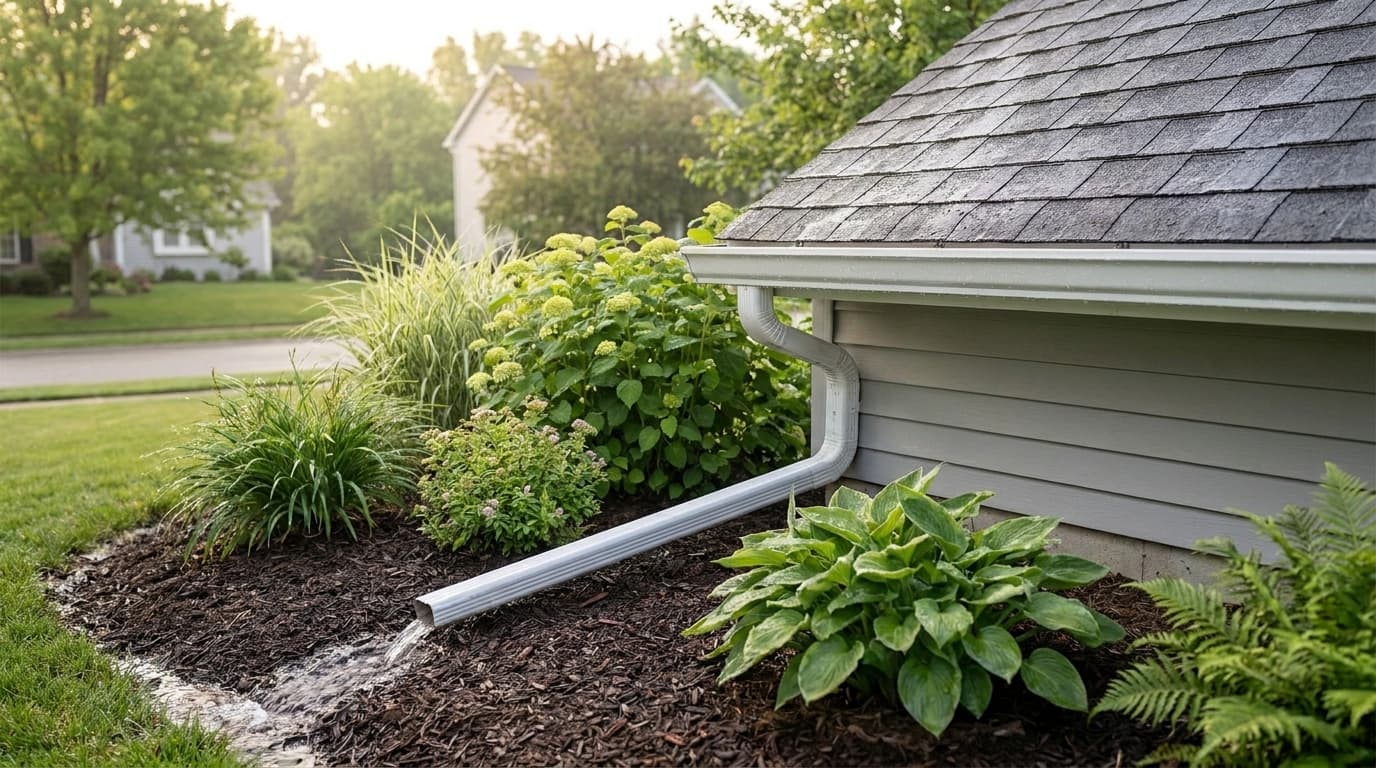
The fix for gutter runoff wrecking your landscaping is almost always about where the water lands: get downspout discharge out of your planting beds and several feet from the foundation, then absorb the energy of the water where it does land with splash blocks, rock, or a rain garden. Concentrated runoff carves channels in mulch, drowns plant roots, and splashes soil onto siding — but all of that is preventable with a few targeted changes to how water leaves your roof. Ohio's summer storm season is exactly when this matters most.
A gutter system collects an enormous amount of water and funnels it to a handful of discharge points. On a typical Ohio home during a one-inch rain, that's hundreds of gallons exiting from just a few downspouts. If those points sit in the middle of a flower bed or dump right at the foundation, the water has nowhere gentle to go — it channels through your mulch, pools around root balls, and erodes the beds you spent a weekend planting. The good news is that protecting your landscaping and protecting your foundation are the same project: move the water away and slow it down.
Why summer runoff hits Ohio landscaping hard
Summer is peak stress for landscaping and drainage at the same time. Columbus and Dayton get violent, fast-moving thunderstorms that drop an inch of rain in under an hour. That intensity is what does the damage — not the seasonal total, but the volume arriving all at once. Freshly mulched beds, newly planted perennials, and soft summer soil are all especially vulnerable to that kind of concentrated flow.
Add in Ohio's clay-heavy soils, which drain slowly and hold water, and you get beds that stay saturated for days after a storm. Roots sitting in waterlogged clay suffocate and rot. So the enemy isn't just erosion — it's standing water, too.
Move the water: discharge placement
The first and most important step is getting the discharge point out of the landscaping and away from the house.
Extend the downspouts
A downspout that ends right at the foundation is the root of most landscaping runoff problems. Extending it moves the discharge past the vulnerable zone.
- Rigid extensions (four to six feet of downspout) are durable and carry water past the bed and the backfill soil.
- Roll-out or flip-up extensions are convenient for mowing but need to actually be flipped down before storms to work.
- Underground drain lines to a pop-up emitter in the lawn are the cleanest solution — the water travels invisibly under the bed and surfaces well out in the yard.
Aim for the lawn, not the bed
Wherever practical, route discharge onto turf rather than mulch. Grass holds soil far better than loose mulch and shrugs off flowing water that would channel straight through a planting bed.
Slow the water down where it lands
Once the water is clear of the foundation, the second job is absorbing its energy so it doesn't carve a new channel wherever it discharges.
Splash blocks and rock beds
- A splash block under the discharge spreads and slows the flow — the simplest defense against a crater forming at the outlet.
- A rock or river-stone bed beneath and beyond the discharge point dissipates energy over a larger area and looks intentional. A shallow trench lined with landscape fabric and filled with river rock (a dry creek bed) is both functional and attractive.
Rain gardens: turning runoff into an asset
A rain garden is a shallow, planted depression positioned to catch downspout discharge. It holds the water briefly, lets it soak in slowly, and is planted with species that tolerate both wet and dry spells. In Ohio's clay soils it needs to be built correctly — with amended soil for drainage — but done right it turns a runoff problem into a low-maintenance feature and takes pressure off your storm drainage entirely.
Protect the beds you already have
For existing landscaping taking a beating, a few targeted moves help:
- Regrade lightly so beds slope away from the house, not toward it, and don't let mulch pile against the foundation or siding.
- Use heavier mulch — shredded hardwood knits together and resists floating far better than light bark nuggets or rubber mulch, which wash away in a hard rain.
- Add edging to keep mulch and soil contained when water does flow through.
- Choose tougher plants for the highest-runoff spots — natives and water-tolerant species handle the wet-then-dry swing of Ohio summers better than fussy ornamentals.
Don't forget the gutters themselves
All of this assumes the gutters are actually working. Overflowing gutters create a curtain of water that lands right at the foundation and destroys the beds below, no matter how well you've placed your downspouts. If your gutters spill over in summer storms, the runoff hitting your landscaping is a symptom — clogged, undersized, or poorly pitched gutters are the cause. Cleaning, guards, or proper sizing fix the problem at the source before any downspout extension can help.
Regional notes for Cleveland, Columbus, and Dayton
Cleveland
Cleveland's clay soils and rolling lots mean runoff tends to channel downhill fast, carving through beds on the low side of the house. Directing discharge across turf toward the natural low point, and using river-rock beds to slow it, protects landscaping better than fighting the grade. Lake-effect rain also keeps beds wet, so water-tolerant plantings pay off.
Columbus
Columbus's fast summer thunderstorms deliver huge volumes in minutes, overwhelming beds that sit right below the eaves. Underground drain lines to a pop-up emitter out in the lawn are especially effective here, moving that concentrated storm flow well clear of central-Ohio landscaping before it can erode anything.
Dayton
Dayton's heavy storms and flatter neighborhoods lead to standing water and saturated beds after a downpour. Rain gardens and improved discharge routing help the water soak away instead of pooling, and heavier hardwood mulch resists the washout that Dayton's high-volume summer rain tends to cause.
Frequently Asked Questions
How do I stop gutter runoff from washing out my mulch in Cleveland?
In Cleveland, start by extending downspouts past the beds and onto the lawn, then slow the discharge with a splash block or river-rock bed so it can't channel through the mulch. Switching to shredded hardwood mulch, which knits together and resists floating, makes a big difference on the sloped lots common around Cleveland.
Why does my Columbus landscaping flood every summer storm?
Columbus's intense summer thunderstorms drop a lot of water fast, and if your downspouts discharge into or near the beds, that volume floods them every time. Routing the water away with extensions or an underground line to a pop-up emitter in the lawn, and making sure the gutters aren't overflowing, usually solves it.
What's the best way to handle gutter runoff on a flat Dayton lot?
On a flat Dayton lot, the challenge is that water doesn't drain away on its own, so it pools near the house. Underground drain lines to a daylight discharge or a properly built rain garden are the most reliable options, carrying the water well clear of the foundation and letting it soak in slowly instead of flooding the beds.
Keep the water where it belongs
Protecting your landscaping and protecting your foundation are the same job — it all comes down to where the roof water ends up. If summer storms are washing out your beds in Cleveland, Columbus, or Dayton, the Zipco Gutters team is happy to look at your gutters, downspouts, and discharge points together and lay out a straightforward plan to send the water somewhere it won't do harm.
Get a free gutter quote in your city
Serving Cleveland, Columbus, and Dayton with seamless aluminum gutters, written quotes, and a workmanship warranty.