
Century Homes, Modern Gutters: What Cleveland's Older Houses Need
Cleveland is full of century homes with box gutters, original fascia, and buried downspout lines. What Lakewood, Parma & Cleveland Heights owners should know.
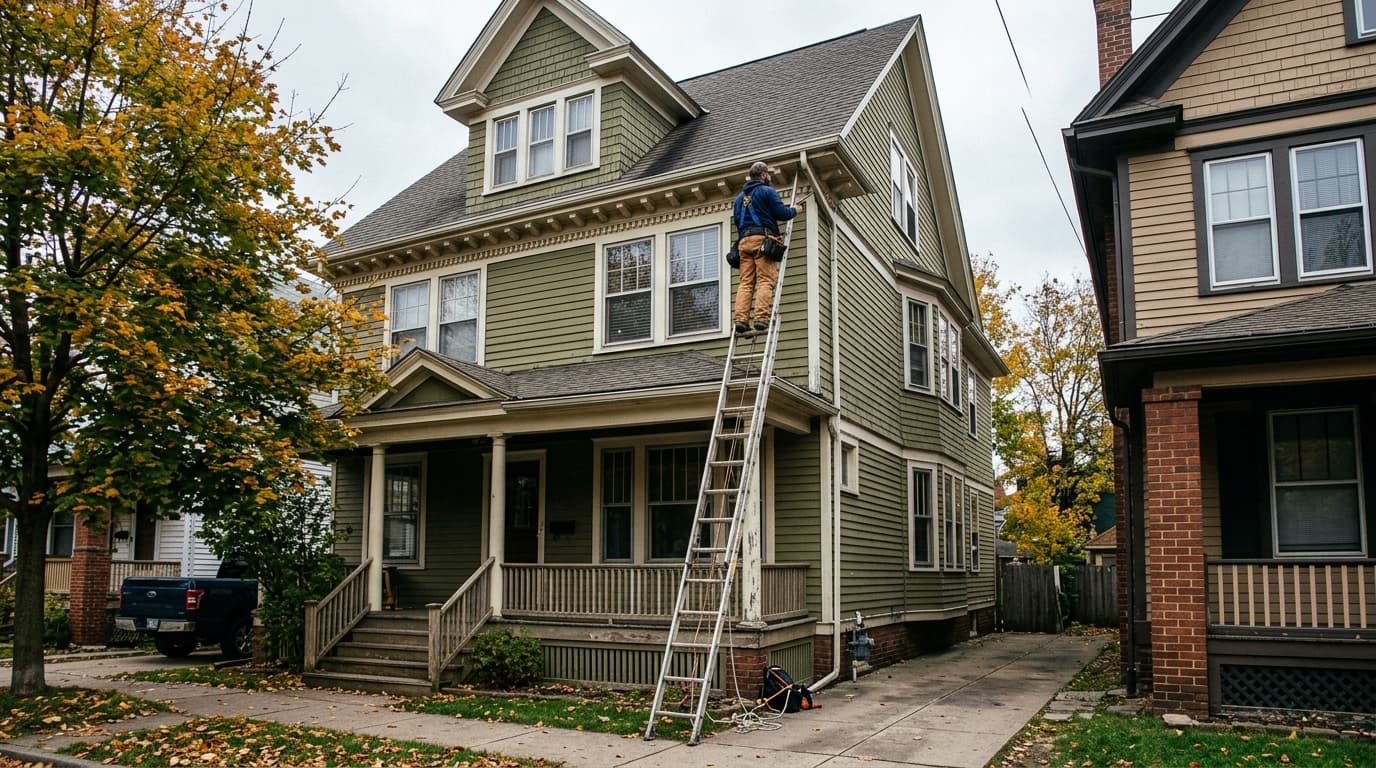
On a Cleveland century home, four things usually decide the job before anyone talks about gutter color: whether you have hung gutters or a built-in box gutter, what condition the original fascia is in, whether there's a drip edge at the roof line, and where your downspouts actually discharge. Those four answers change the scope, the price, and sometimes whether replacement is even the right call.
Greater Cleveland has one of the oldest housing stocks of any major American metro. Lakewood, Old Brooklyn, Parma, Cleveland Heights, Berea, and the older sections of Brunswick and Medina are full of houses built between roughly 1900 and 1930 — solid, well-framed homes with details you can't buy new. They also have gutter conditions you simply don't encounter on a 1998 colonial, and a contractor who only works on newer homes will quote them wrong.
First question: hung gutters or built-in?
Many Cleveland-area homes of this era were built with built-in box gutters — a wooden trough constructed into the roof structure itself at the eave, lined with metal, rather than an aluminum gutter hung on the outside of a fascia board. From the street they're nearly invisible, which is why owners are often surprised to learn they have them.
They matter enormously because:
- A box gutter is part of the roof, not an accessory. When its liner fails, water goes into the roof structure and down inside the wall — not down the outside of the house.
- It can't simply be replaced with hung gutters. The options are relining the existing trough (with membrane or new metal), or a more involved conversion that closes off the box and hangs conventional gutters below. Both are real projects with real costs.
- Anyone who proposes hanging a new aluminum gutter under a failing box gutter without addressing the box has not solved your problem. The box will keep leaking into the structure behind the new gutter.
If you're not sure which you have, look at the eave from the ground: a box gutter typically presents as a wide, flat-topped cornice with no visible trough hanging off it, and the downspout appears to emerge from the cornice itself.
Second question: what's the fascia actually made of, and is it sound?
On a hung-gutter century home, the fascia is likely original wood — often old-growth lumber that's better than anything at a lumberyard today, and often also carrying 90 years of paint, patched nail holes, and water damage from a gutter that leaked at some point in the Eisenhower administration.
What we look for:
- Soft, spongy, or dark-stained wood, particularly under old seams and at inside corners.
- Decorative trim and crown detail at the cornice. Some Cleveland homes have profiled woodwork that a careless gutter installation will damage or cover.
- Whether the board is thick enough and solid enough to hold hidden hangers. New gutters are only as secure as what they're screwed into.
- Nail and spike holes from decades of previous installations, each one an entry point for water.
Aluminum fascia wrap over sound wood is a durable solution and eliminates the repainting. Wrapping over rot hides a problem that keeps growing. On a century home, budget for some carpentry — it's the norm here.
Third question: is there a drip edge?
Most homes of this vintage were built without one. A drip edge is the metal flashing at the roof edge that directs water off the shingles and into the gutter instead of letting it curl back under and run down the fascia.
Without it, a percentage of every rainfall goes behind the gutter by design. Over decades in Cleveland's freeze-thaw climate, that's what turns original fascia to pulp. If a roof has been replaced recently, drip edge was likely added. If it hasn't, this is a conversation to have with your roofer and gutter contractor together.
Fourth question: where do the downspouts go?
This one is specific to older Northeast Ohio neighborhoods and it catches people off guard.
Many century homes in Cleveland and its inner-ring suburbs have downspouts tied into buried lines — sometimes clay tile, sometimes cast iron — that run underground to the sewer. Two things follow from that:
- The buried line may be failing. Clay tile that's a hundred years old cracks, fills with roots, and collapses. A downspout draining into a broken buried line is effectively discharging directly against your foundation, underground, where you can't see it. If a downspout backs up and overflows at the top during heavy rain, suspect the buried line.
- Many Northeast Ohio communities regulate this. Sending roof runoff into a combined sewer contributes to sewer overflows during storms, and a number of local municipalities and the regional sewer authority have pursued downspout disconnection requirements or incentive programs over the years. Rules vary community to community, so check with your city before you re-plumb anything.
If you disconnect, the water has to go somewhere sensible — which on a narrow city lot in Lakewood or Old Brooklyn, with the neighbor's house 12 feet away, takes actual planning. Options include extensions to a properly graded area, underground drainage lines run out to daylight, or a dry well. What you cannot do is dump it toward the property line and make it your neighbor's problem.
The practical realities of working on these houses
- Height. Many of these homes are two and a half or three stories with steep roofs. That's extension-ladder work at serious height, which is both a safety issue and a cost factor in any quote.
- Narrow lots. Side yards on city lots often leave no room to set a ladder at a safe angle, and no room for a gutter machine truck. Access affects price legitimately.
- Slate and tile roofs. Some Cleveland Heights, Shaker Heights, and Lakewood homes have original slate or clay tile. These roofs cannot be walked on. Gutter work has to be done entirely from ladders, by someone who understands what a cracked slate costs to replace.
- Ice dams. Older homes are frequently under-insulated and under-ventilated at the attic, which is the actual cause of ice dams. In a Cleveland winter, a century home with a warm attic will form dams regardless of how good the gutters are. Fixing the attic is the real solution.
Frequently Asked Questions
What are box gutters, and does my old Cleveland home have them?
Box gutters are wooden troughs built into the roof structure at the eave and lined with metal, common on homes built roughly 1900–1930. From the ground they look like a wide, flat cornice with no gutter hanging below it, and the downspout appears to come out of the cornice. They can be relined or converted, but they can't simply be swapped for hung gutters — and a failing one leaks into the structure rather than down the outside wall.
Can I just hang new aluminum gutters on my century home in Lakewood?
Often yes, but only after the fascia is assessed and repaired and a drip edge is addressed. Original fascia on a home this age frequently has soft spots from decades of leaks, and hidden hangers need solid wood to hold. If the home has built-in box gutters, hanging new gutters below them without fixing the box leaves the real leak in place.
Are Cleveland homeowners required to disconnect downspouts from the sewer?
It depends on your community. Roof runoff entering a combined sewer contributes to overflows during storms, and various Northeast Ohio municipalities and the regional sewer authority have pursued disconnection requirements and incentive programs. Rules and timelines differ by city, so check locally before changing anything — and plan where the water will go, since on a narrow lot that takes real thought.
Century homes deserve a closer look
If you own an older home in Lakewood, Parma, Cleveland Heights, Berea, Medina, or anywhere around Cleveland, the Zipco Gutters team will look at the fascia, the roof edge, and where the water actually ends up — not just measure linear feet. Reach out for a free estimate and an honest assessment of what your house needs.
Get a free gutter quote in your city
Serving Cleveland, Columbus, and Dayton with seamless aluminum gutters, written quotes, and a workmanship warranty.