
Matching Gutter Colors to Your Ohio Home's Exterior
How to match gutter colors to your Ohio home's exterior — a neighborly guide for Cleveland, Columbus & Dayton homeowners on trim, roof, and siding.
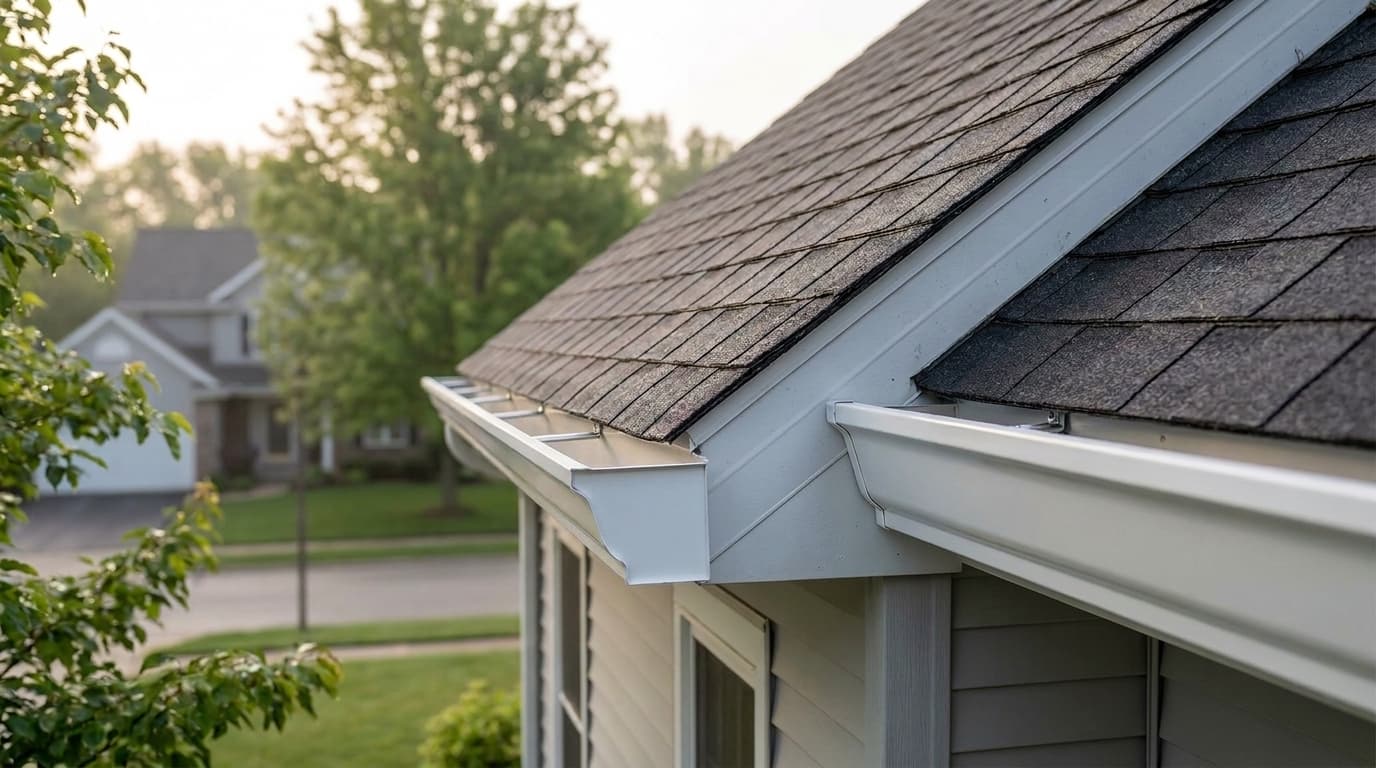
The safest rule for matching gutter colors is to tie the gutter to your trim (usually white or a soft neutral) and the downspouts to whatever they run against — siding or trim — so the vertical runs disappear. That's the low-risk default, but the more interesting decision is whether to match your roof instead, or use the gutter as a deliberate accent line. The right call depends on your siding color, roof shade, and how much you want the gutters to stand out.
Most Ohio homeowners never think about gutter color until they're standing in a driveway holding a fan deck of baked-on enamel samples. Then it suddenly matters a great deal, because a seamless aluminum gutter is a permanent fixture — the color you pick is going up on the house for the next 20 to 30 years. In Cleveland, Columbus, and Dayton, where housing stock runs from 1920s bungalows to new-build colonials, the color that looks right varies more than you'd expect.
Start with the three surfaces your gutter touches
A gutter never sits in isolation. It runs along the fascia, sits just below the roof edge, and the downspouts travel down the face of the siding. Those three surfaces — trim, roof, and siding — are your reference points.
Match the trim (the most common choice)
On most Ohio homes, the fascia and eave trim are white or an off-white like almond. Matching the gutter to that trim reads as clean and intentional, and it's forgiving: white and almond hide minor dirt streaking better than dark colors, and they never clash with the siding.
- Best for: traditional colonials, capes, and any home with prominent white trim.
- Downspouts: run them in the same trim color where they cross trim, or in the siding color where they cross a large field of siding.
Match the roof
Tying the gutter to your shingle color makes the whole roof edge read as one continuous line, which can make a house look taller and more streamlined. A charcoal or black gutter under a dark architectural shingle is a popular modern look.
- Best for: homes with dark roofs and minimal white trim, or a contemporary aesthetic.
- Watch-out: dark gutters show water spotting and pollen more than white, so they benefit from occasional rinsing.
Match the siding
Painting the downspouts to match the siding is the trick that makes them visually vanish. Even if the top gutter matches the trim, siding-matched downspouts keep the vertical lines from chopping up your facade.
Color families that work on common Ohio homes
Aluminum gutter coil comes in a couple dozen baked-on enamel colors, and manufacturers deliberately name them to echo common siding and trim palettes. A few pairings that consistently look right across Ohio neighborhoods:
- White or almond siding → white gutters, downspouts in white or a soft clay.
- Gray siding → white gutters for contrast, or a matching gray/pewter gutter for a seamless look.
- Tan or beige siding → almond, clay, or musket brown; brown downspouts disappear against beige.
- Dark blue or green siding → white trim-matched gutters, or bronze for a warmer accent.
- Red brick → white, almond, or bronze; avoid stark black unless the trim is already black.
The 60-30-10 idea, applied to gutters
Designers talk about a dominant color (roughly 60% of the exterior), a secondary color (30%), and an accent (10%). Your siding is the 60, your trim and roof split the 30, and your gutters should almost always belong to that secondary band rather than becoming a fourth competing color. When in doubt, pick a color you already have on the house rather than introducing a new one.
When a contrasting gutter is the right move
Matching isn't always the goal. A deliberate contrast can sharpen a home's lines — a crisp white gutter under a dark roof, or a black gutter framing a light-gray modern farmhouse. The key is intentionality: the contrast should look like a design choice, not an accident. If you're going to contrast, commit to it on both the gutter and the downspouts so the eye reads it as a frame.
Practical notes before you commit
- See the sample on the house, outdoors. Enamel colors shift dramatically between a showroom light and Ohio daylight. Hold the coil sample against your actual siding and fascia at midday.
- Factor in HOA rules. Some newer Columbus and suburban developments restrict exterior colors — check before you order.
- Remember the guards and hangers. Ask whether hangers, end caps, and gutter guards come in a matching finish. Mismatched hardware is a small detail that cheapens an otherwise clean job.
- Copper is its own category. If you're on a historic home and considering copper, know that it will patina from bright penny to brown to green over years — that's the appeal, but it's a look you're committing to.
Regional notes for Cleveland, Columbus, and Dayton
Cleveland
Cleveland's older east- and west-side neighborhoods are full of century homes with detailed wood trim, deep eaves, and slate or dark-shingle roofs. On these, a trim-matched white or a period-appropriate bronze usually flatters the architecture more than a stark modern black. Lake-effect grime also means lighter colors stay looking cleaner between rinses.
Columbus
Columbus spans the widest style range of the three markets, from Short North doubles to new-build developments in New Albany and Dublin. New construction there leans toward the modern dark-roof, dark-gutter look, while established neighborhoods like Clintonville and Upper Arlington still look best with classic white or almond gutters that respect the traditional lines.
Dayton
Dayton's mix of mid-century ranches and brick colonials pairs well with warm neutrals — almond, clay, and musket brown read naturally against beige siding and red brick. Because Dayton sees heavy storm and pollen seasons, homeowners who choose darker gutters should plan on an occasional rinse to keep them looking sharp.
Frequently Asked Questions
Should my gutters match my roof or my trim in Cleveland?
For most Cleveland homes with prominent white or wood trim, matching the trim looks cleanest and hides lake-effect grime better. Match the roof instead only if you have a dark shingle and minimal trim and you want that streamlined, modern roof-edge look.
Do dark gutters fade faster on Columbus homes?
Quality baked-on enamel finishes are UV-stable and hold their color for decades in central Ohio, so dark gutters don't meaningfully fade faster than light ones. They do show water spotting and pollen more visibly, so plan on rinsing them once or twice a year to keep them looking fresh.
What gutter color hides downspouts best on a Dayton home?
The best-hidden downspouts are painted to match whatever siding they run down — beige downspouts on beige siding, or brown against brick effectively disappear. Many Dayton homeowners keep the top gutter matched to the trim and switch the downspout color to the siding for the cleanest look.
Let's get the color right the first time
Choosing a gutter color is a permanent decision, and it's worth getting a second opinion before the coil goes on the truck. If you're weighing options for a home in Cleveland, Columbus, or Dayton, the Zipco Gutters team is happy to bring samples out and hold them against your actual siding, trim, and roof in daylight — no pressure, just a neighborly eye for what will look right for the next 20 years.
Get a free gutter quote in your city
Serving Cleveland, Columbus, and Dayton with seamless aluminum gutters, written quotes, and a workmanship warranty.