
Spotting Hidden Gutter Leaks Before They Cause Damage
How to spot hidden gutter leaks before they rot fascia or crack a foundation — an Ohio homeowner's guide for Cleveland, Columbus & Dayton homes.
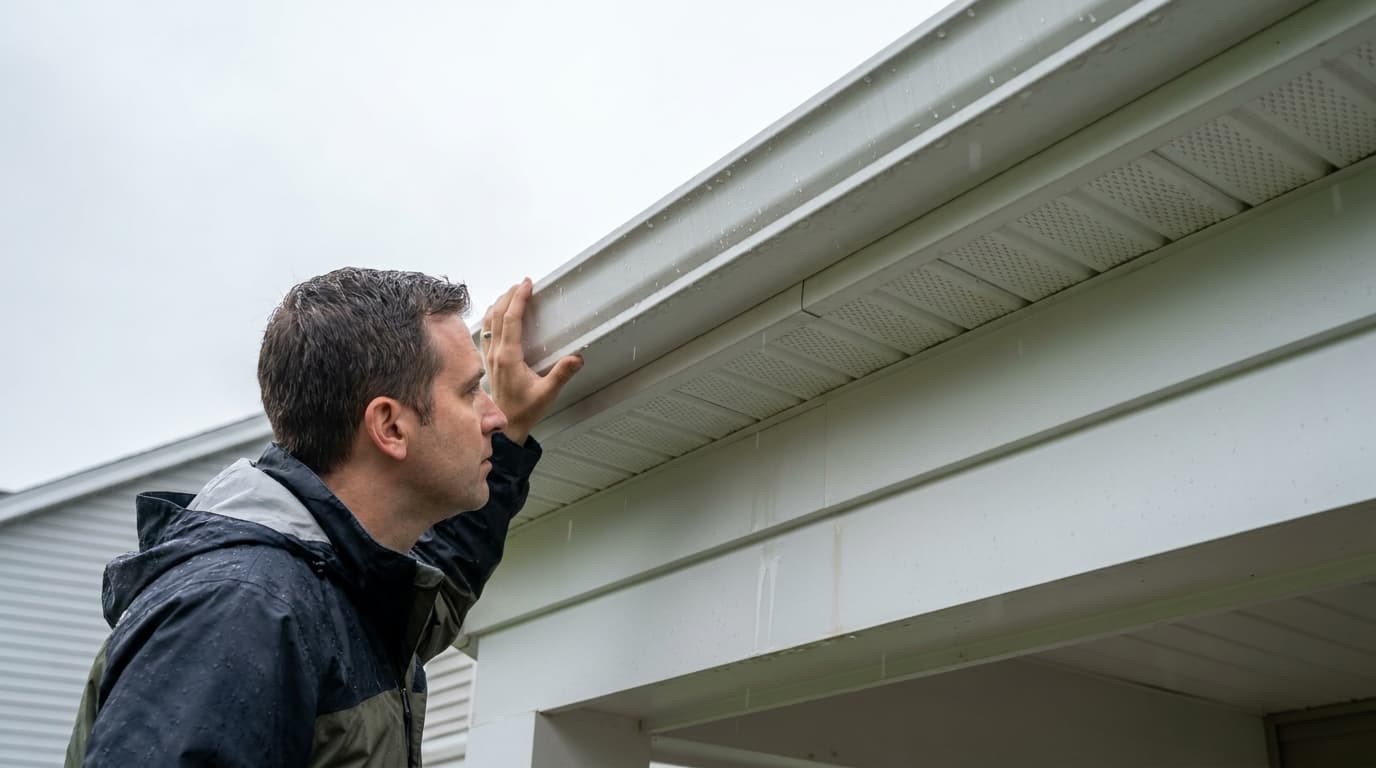
Hidden gutter leaks usually announce themselves in small ways first — faint stains on the fascia, a drip at a seam during heavy rain, peeling paint below a joint, or a damp patch at the foundation — long before you'd ever see water pouring out. The trick is knowing where leaks hide (corners, seams, downspout connections, and behind the back of the trough) and inspecting during or right after rain, when the evidence is fresh. Caught early, most leaks are a cheap fix; ignored, they rot fascia and undermine foundations.
The frustrating thing about gutter leaks is that the worst ones are the quietest. A dramatic overflow during a Columbus thunderstorm is easy to see and easy to act on. But a slow leak at a corner joint, dripping a cup of water onto the fascia every time it rains, can go unnoticed for two or three years — right up until the wood behind it turns to sponge. In Ohio's freeze-thaw climate, those small leaks also get worse every winter as water works into a seam, freezes, and pries it open a little more.
Where gutter leaks actually hide
Leaks don't happen randomly. They concentrate at the connection points and stress zones. If you know the usual suspects, you know where to look.
The four most common leak points
- Corners and miters. Every inside and outside corner is a sealed joint, and sealant is the first thing to fail. This is the single most common leak location.
- End caps. The little caps at the ends of each run are sealed joints too, and they crack as the aluminum expands and contracts.
- Downspout outlets. Where the trough drops into the downspout is a cut opening that's sealed and riveted — a classic slow-drip spot.
- Seams on sectional gutters. Older sectional gutters are joined every 10 feet, and every one of those joints is a potential leak. (Seamless gutters largely eliminate this problem, which is why they've become the Ohio standard.)
The sneaky one: behind the trough
Not all "leaks" are holes in the gutter. Sometimes water is escaping over the back edge of the trough — because the gutter is pitched wrong, hung too low behind the drip edge, or missing drip-edge flashing entirely. The water runs down the fascia instead of into the gutter, and it looks exactly like a leak from the ground. This one rots fascia fast because the water is aimed directly at the wood.
The early warning signs, from subtle to serious
Leaks give off a predictable progression of clues. The earlier you catch them on this list, the cheaper the repair.
- Faint vertical streaks on the fascia or downspout. Dirty-water tracks are the first visible sign. On white fascia they show up as gray or tan lines.
- Peeling or bubbling paint below a joint. Paint fails where wood stays damp. A blister directly under a corner or seam is a strong tell.
- A visible drip during rain. Go out in a steady rain and watch the corners and downspout connections. A leak that hides in dry weather is obvious when water is moving through the system.
- Mildew or a dark stain on the siding. Water escaping the gutter and hitting the wall leaves mildew lines and streaks, especially on lighter siding.
- Soft or spongy fascia. Press the wood (from a stable ladder with a spotter). Any give means rot has started.
- A damp patch or erosion trench at the foundation. If a downspout joint leaks near the ground, or a gutter overflows unseen, you'll find muddy splash marks and eroded mulch below.
- Water in the basement or crawl space. The last and most expensive stage — chronic gutter leaks are a leading cause of Ohio basement moisture.
How to inspect for hidden leaks (a 20-minute routine)
You don't need to be a pro to catch most leaks early. Twice a year, and after any big storm, do this:
The dry-weather check
- Walk the perimeter and look up at every corner, end cap, and downspout connection for staining or white residue (dried sealant failure often leaves a chalky mark).
- Scan the fascia for streaks, peeling paint, and discoloration.
- Check the ground under each downspout for splash erosion.
The wet-weather check (the one that actually finds leaks)
- During a steady rain, watch the gutters run. Look specifically at the corners and downspout outlets for drips.
- Listen for water hitting the ground where it shouldn't — a downspout that's disconnected inside will trickle behind the wall.
- If it's not raining, you can simulate it: run a garden hose into the high end of a gutter run and watch every joint downstream.
What to document
Take dated photos of anything you find — from the ground, no heroics on the ladder. Photos let a contractor diagnose the likely cause before they even arrive, and they establish a timeline if the damage ever becomes an insurance question.
Repair or replace? A quick guide
- Reseal or re-rivet: a single leaking corner, end cap, or downspout joint on otherwise sound gutters. Cheap, fast, and often a same-visit fix.
- Re-pitch or re-hang: water escaping behind the trough because of poor slope or a missing drip edge.
- Replace the run or the system: multiple leaking seams on old sectional gutters, pinholes along the trough bottom, or leaks combined with fascia rot. At that point, patching just buys a season, and seamless replacement solves the recurring seam problem for good.
Regional notes for Cleveland, Columbus, and Dayton
Cleveland
Cleveland's freeze-thaw cycles are brutal on sealed joints — water works into a corner seam, freezes, and levers it apart a little more each winter. Cleveland homeowners should pay special attention to corners and end caps in early spring, when a winter's worth of ice damage first becomes visible.
Columbus
Columbus sees intense summer downpours that expose leaks the rest of the year never reveals. The best time to spot a hidden Columbus leak is during one of those hard central-Ohio thunderstorms — stand under the eave (dry, on the porch) and watch which joints drip when the system is running at full volume.
Dayton
Dayton's storm and hail exposure can create pinhole damage and cracked seams that don't leak until the next heavy rain. After any significant Dayton storm, walk the perimeter and check both the gutter joints and the fascia behind them, since wind-driven rain also gets behind troughs that are hung a hair too low.
Frequently Asked Questions
How can I tell if my Cleveland home has a hidden gutter leak?
The clearest tell in Cleveland is inspecting corners and end caps in early spring, when freeze-thaw damage from the winter first shows up as cracked sealant, chalky residue, or staining on the fascia. Watching the gutters during a rain and checking for soft spots in the fascia will confirm whether a joint is actively leaking.
What does a leaking gutter joint look like on a Columbus home?
On a Columbus home, a leaking joint typically shows as a dirty vertical streak on the fascia or downspout, peeling paint directly below a corner, and a visible drip during heavy summer rain. If you see mildew lines on the siding beneath a seam, water has been escaping there for a while.
Can a small gutter leak really damage my Dayton home's foundation?
Yes — a slow leak at a downspout connection can dump water right against the foundation every time it rains, and over a few Dayton storm seasons that leads to erosion, basement moisture, and eventually foundation stress. Redirecting the water and sealing the joint early is far cheaper than the foundation repair it prevents.
Catch it while it's still small
A hidden gutter leak is one of those problems that's almost trivial to fix early and genuinely expensive to fix late. If you've spotted staining, a drip, or a damp patch on your Cleveland, Columbus, or Dayton home, the Zipco Gutters team is happy to track down the source and tell you honestly whether it's a quick reseal or something more. No pressure — just a straight answer before the next storm.
Get a free gutter quote in your city
Serving Cleveland, Columbus, and Dayton with seamless aluminum gutters, written quotes, and a workmanship warranty.