
How Gutters Protect Your Foundation: An Ohio Homeowner's Guide
How do gutters protect your foundation? An Ohio homeowner's guide for Cleveland, Columbus & Dayton on drainage, hydrostatic pressure, and preventing cracks.
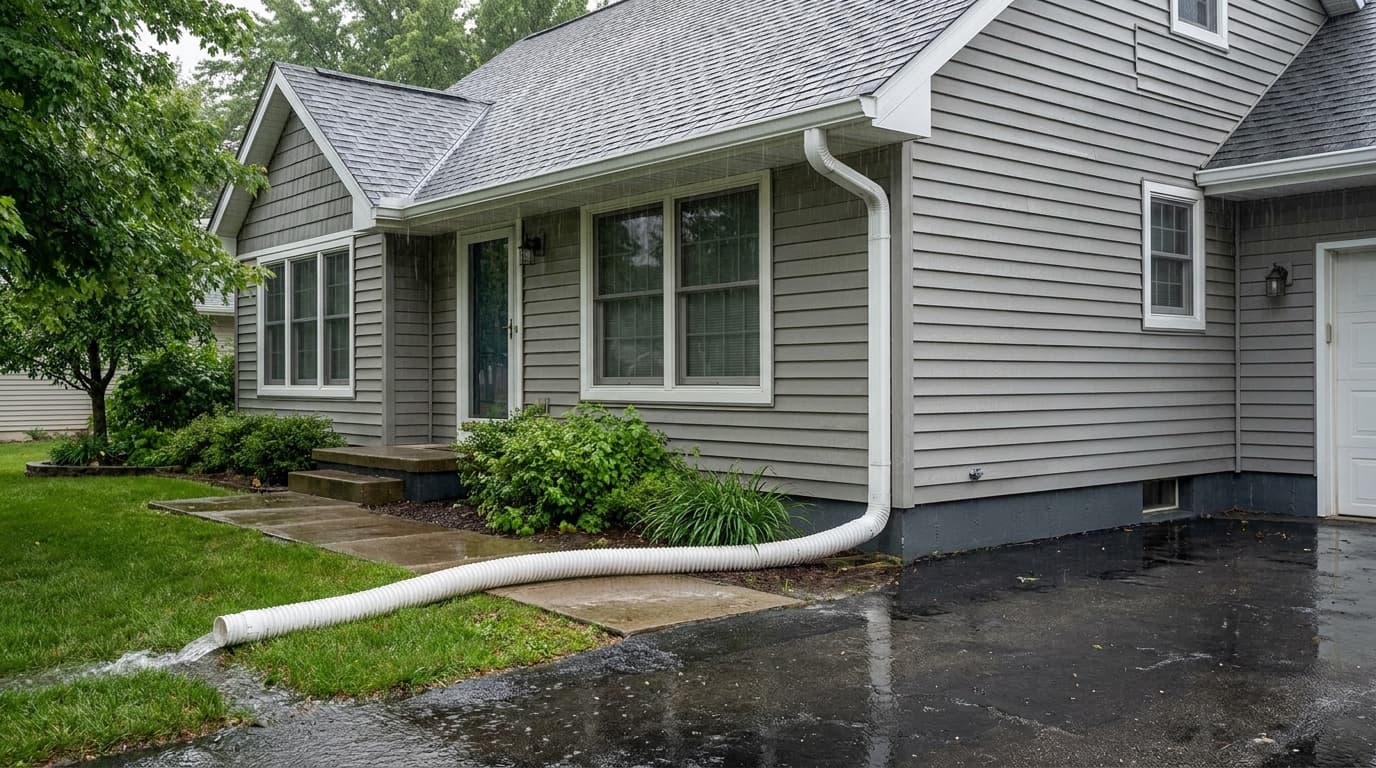
Gutters protect your foundation by collecting every gallon that rolls off the roof and carrying it far enough away that the soil around your house never gets saturated — because saturated soil expands, pushes on the foundation walls, and eventually cracks them. In Ohio's clay-heavy soils and freeze-thaw climate, that protection is the difference between a dry basement and a five-figure repair. It's the least glamorous job a gutter does, and by far the most valuable.
Most homeowners think of gutters as a way to keep water off their heads at the front door. The real work happens underground, where you can't see it. A roof is a large water-collection surface — a typical Ohio home sheds hundreds of gallons in a single storm — and all of that water has to go somewhere. Gutters decide whether it goes safely to the yard or straight down against your foundation walls.
Ohio makes this especially important. The region's clay soils swell dramatically when wet and shrink when dry, and the freeze-thaw cycle in Cleveland, Columbus, and Dayton adds a second destructive force. Understanding how gutters break that cycle helps you see why maintaining them matters far more than the modest cost of doing so.
The science: why water is the enemy of a foundation
To appreciate what gutters do, it helps to understand what happens when they're absent or failing.
Hydrostatic pressure
When soil around your foundation becomes saturated, the water in it exerts sideways force on the concrete or block walls. This is called hydrostatic pressure, and it's relentless. Given enough saturation over enough time, it pushes walls inward, opens hairline cracks into real ones, and forces water through any weakness it finds. Gutters prevent saturation in the first place by keeping roof runoff away from the wall.
Ohio's clay soils
Much of Ohio sits on expansive clay. When it absorbs water it swells, and when it dries it contracts, sometimes pulling away from the foundation entirely. This constant expand-and-contract cycle stresses footings and walls. Gutters that discharge water well away from the house keep the soil in that critical zone far more stable.
The freeze-thaw multiplier
Water that pools against a foundation in late fall doesn't just sit there — it freezes. Frozen water expands about 9% and pushes on everything around it, including your foundation and any water already inside a crack. Each Cleveland, Columbus, or Dayton winter delivers dozens of these cycles, prying at every weakness. Keeping the soil dry going into winter is the single best way to blunt freeze-thaw damage.
How a working gutter system does the job
Foundation protection isn't one part — it's a chain, and it's only as strong as its weakest link.
Collect at the roof edge
Properly sized and pitched gutters catch the sheet of water coming off the roof before it can fall to the ground beside the house. Overflow — from clogs, undersizing, or lost pitch — dumps that water exactly where you don't want it, right at the foundation.
Concentrate and carry down
Downspouts gather the collected water and bring it to ground level in a controlled stream instead of letting it cascade over the wall. The number and size of downspouts determine how fast the system can move a storm's worth of water.
Discharge away from the house
This is the step most homeowners skip. A downspout that ends right at the foundation just delivers all that concentrated water to the worst possible spot. Extensions, splash blocks, or buried drain lines should carry it at least four to six feet out — farther on flat lots.
Grade the soil to help
The ground within the first ten feet of the house should slope away at roughly six inches of drop. Good grading works with the gutters; poor grading undoes their work by channeling water back toward the wall.
What foundation trouble looks like
When the gutter chain breaks, the foundation shows it — often long before the basement floods.
- Hairline stair-step cracks in block walls or diagonal cracks from window corners.
- Efflorescence — a white, chalky mineral residue on basement walls where water has been wicking through.
- Musty odors or damp spots in the basement or crawl space after rain.
- Doors and windows that suddenly stick as the foundation shifts.
- Erosion trenches or pooling in the soil directly below a downspout.
- Mulch or landscaping washed out along the foundation line.
Any one of these is worth investigating. Several together mean water has been reaching the foundation for a while.
Small gutter investments that protect a big asset
You don't need to rebuild your foundation to protect it — you need to keep water moving. The highest-value steps are also the cheapest:
- Keep gutters clean so they never overflow at the wall.
- Add downspout extensions to carry water four-plus feet out.
- Correct the pitch so no run holds standing water.
- Add downspouts to long runs so no single drain is overwhelmed.
- Regrade any soil that slopes back toward the house.
Compared to the cost of foundation crack repair, waterproofing, or a sump system, this is pennies on the dollar.
Regional notes for Cleveland, Columbus, and Dayton
Cleveland
Cleveland's heavy freeze-thaw cycles make foundation protection especially urgent. Water that saturates the soil in November freezes and expands all winter, prying at footings and cracks. Keeping downspouts extended and gutters draining cleanly into winter is the best defense for the region's many older basements.
Columbus
Central Ohio's expansive clay soils swell hard during the wet spring and summer, then shrink in dry spells — a cycle that stresses foundations year-round. Columbus homeowners benefit most from generous downspout discharge that keeps the soil in the critical foundation zone as stable as possible.
Dayton
Dayton's intense storm bursts can saturate soil in a matter of hours, spiking hydrostatic pressure fast. Combined with the area's older housing stock, that makes downspout capacity and long extensions especially important. Getting a storm's water well away from the house quickly is the priority in southwest Ohio.
Frequently Asked Questions
Can bad gutters really crack a Cleveland home's foundation?
Yes. In Cleveland, overflowing or missing gutters let roof water saturate the soil against the foundation, and the freeze-thaw cycle then expands that water against the walls all winter. Over several seasons this hydrostatic pressure opens cracks and can push basement walls inward — a common and expensive problem in the region's older homes.
How far should downspouts extend from a Columbus foundation?
In Columbus, downspouts should discharge at least four to six feet from the foundation, and farther on flat lots where water doesn't drain away easily. Given central Ohio's expansive clay soils, longer extensions or buried drain lines that carry water well past the foundation zone are a worthwhile upgrade.
What are the first signs of foundation water damage in a Dayton basement?
In Dayton, watch for a white chalky residue (efflorescence) on basement walls, musty odors after storms, hairline cracks, and damp spots low on the walls. Because Dayton's storm bursts saturate soil quickly, these signs often appear after heavy summer rain — and usually trace back to gutters overflowing or discharging too close to the house.
Protect what your home is built on
Your foundation is the most expensive thing on your property to fix and the easiest to protect with a working gutter system. If you're seeing overflow, pooling, or cracks, the Zipco Gutters team is happy to walk your home and check whether water is reaching where it shouldn't. Reach out for a free estimate in Cleveland, Columbus, or Dayton — a little drainage work now can save you a foundation repair later.
Get a free gutter quote in your city
Serving Cleveland, Columbus, and Dayton with seamless aluminum gutters, written quotes, and a workmanship warranty.