
Gutters Pulling Away From the House? Causes and Fixes for Columbus and Dayton Homes
Why gutters pull away from the house, from failed hangers to heavy debris and rotted fascia, and how they're fixed, with notes for Columbus and Dayton homes.
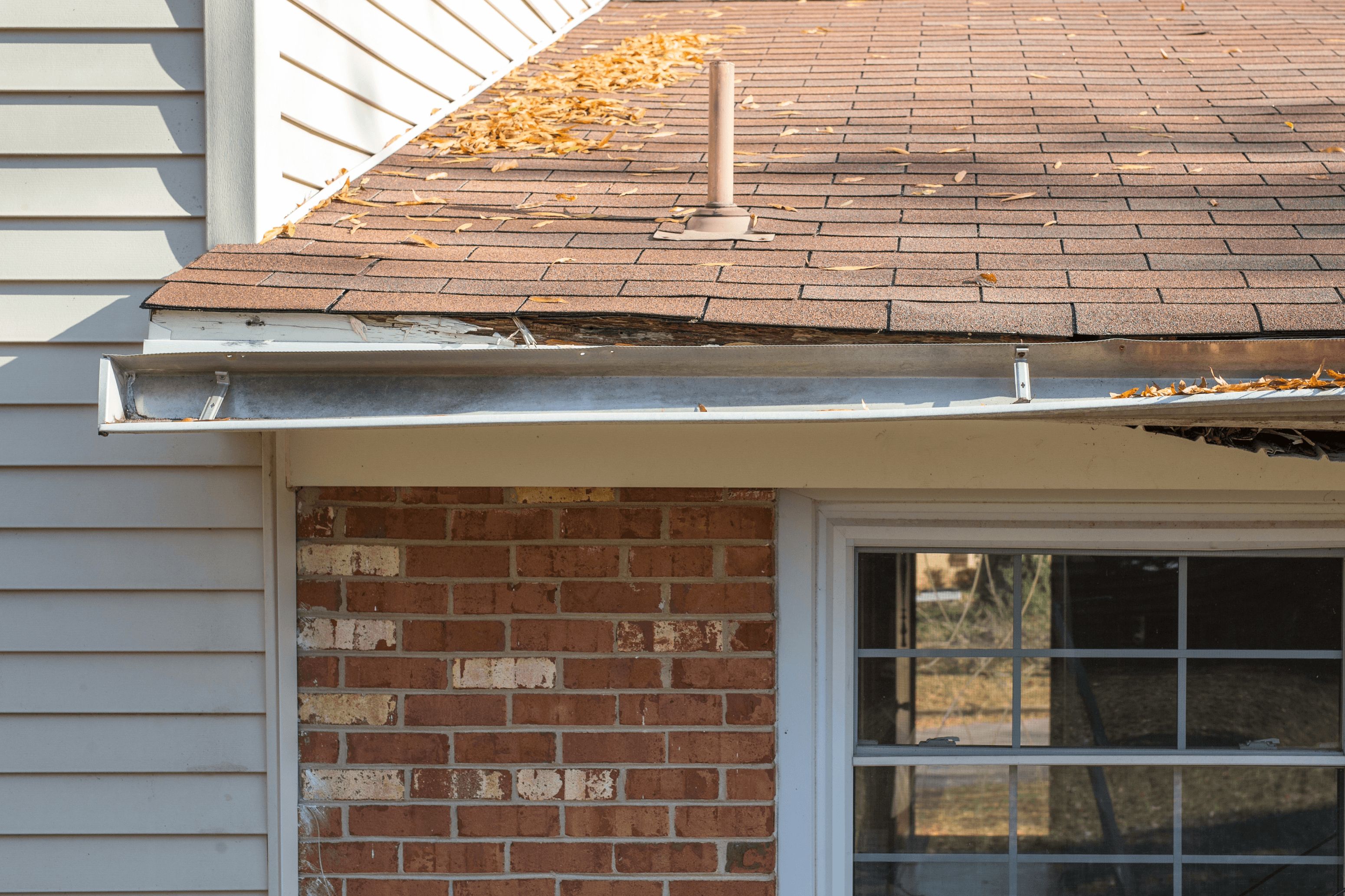
When a gutter pulls away from the house, the cause is almost always one of a few things: hangers that have loosened or failed, a gutter overloaded with debris, water or ice, fascia that's too soft to hold the fasteners, or a pitch problem that keeps water sitting in one spot. The fix depends on which one you're dealing with, and often it's more than one. Pushing the same loose spike back into the same hole rarely lasts.
Here's how to tell what's going on, what a lasting repair looks like, and when replacement makes more sense, with notes for homes in Columbus and Dayton.
What "pulling away" looks like
- A gap between the back of the gutter and the fascia board.
- A run that sags in the middle or tips forward.
- Spikes backing out of the gutter face.
- Water dripping behind the gutter or staining the siding below.
- A gutter that moves when you push on it gently from a ladder.
Even a small gap matters. Water that gets behind the gutter runs down the fascia instead of into the trough, and that's how rot starts.
Cause 1: Hardware that has loosened or failed
Many older homes still have gutters hung with spikes and ferrules: long nails driven through the gutter into the fascia. Over years of heating, cooling, wind and weight, those spikes work loose. Once one lets go, its neighbors carry more of the load and follow.
The fix: replace spike-and-ferrule hardware with heavy-duty hidden hangers screwed into the rafters. Screws hold far better than nails, and fastening into the rafters gives the gutter a much stronger anchor. On Zipco installations, hidden hangers go in every 24 inches.
Cause 2: Too much weight
A gutter full of wet leaves and standing water is heavy, and in winter that load can freeze solid. Clogged gutters holding hundreds of pounds of water and ice are one of the main reasons hangers get overloaded.
The fix: re-secure the gutter, then deal with the source. That usually means regular cleaning, twice a year for most homes and more under heavy trees, or leaf protection to keep debris out. If the gutter overflows in heavy rain even when it's clean, its size is part of the conversation too.
Cause 3: Rotted fascia
Fasteners are only as strong as the wood they go into. When water gets behind a gutter for years, the fascia board softens and rots, and no hanger can grip it. You might see peeling paint, dark stains, or wood that feels spongy.
The fix: where the rot is localized, the damaged section of fascia is replaced and the gutter is re-mounted properly. Wrapping the fascia in aluminum gives it a 30+ year, paint-free finish. Where rot runs along a whole side, the fascia should be replaced along that run before the gutter goes back up. Our post on fascia and soffit warning signs shows what to look for, and our Columbus and Dayton fascia and soffit pages explain the service.
Cause 4: Incorrect pitch
Gutters need a slight slope toward the downspouts, about a quarter inch for every 10 feet. With too little slope, water sits in the trough. With a dip in the wrong place, it collects at the low spot. Standing water adds weight in the same place every time it rains, and that section is often the first to sag.
The fix: re-pitch the run, re-secure it with new hangers, and water-test it to confirm everything drains.
Repair or replace?
Repair usually makes sense when the gutters are under 10 years old, the seams are tight and the damage is limited to one area, such as a sagging section, a few failed hangers or one bad joint. Sometimes a $200 repair is the right answer.
Replacement starts to make more sense when the sagging is widespread, there are multiple leaks, paint is peeling behind the gutters, or the fascia is rotted along long stretches. Our guide to the signs it's time to replace your gutters covers this in detail.
Either way, we diagnose the root cause before quoting. Most repairs are completed within 3–5 days of an approved quote, often in a single visit of 1–3 hours, and every repair is water-tested before we leave.
A note on DIY fixes
Pushing a loose spike back into its hole, or adding another spike next to it, usually buys a few weeks at most. The hole is already enlarged, and if the fascia is soft, a new fastener has nothing to grip. If you do anything yourself, stay off the ladder in wet or icy weather, and treat a quick fix as temporary until the cause is found.
Regional notes for Columbus and Dayton
Columbus
Many homes in older Columbus neighborhoods, such as Bexley, Upper Arlington and Worthington, sit under mature trees, and heavy debris loads are a common reason gutters there start to sag. In newer subdivisions, it's worth checking how the original gutters were hung, since hardware varies from builder to builder. See our Columbus gutter repair page for details.
Dayton
Many Dayton-area homes are single-story ranches with long gutter runs. On a long run, a few failed hangers in the middle can let the whole section sag, and older homes may still have their original spike-and-ferrule hardware. Strong winds during Miami Valley storms can also loosen gutters that are already weak. See our Dayton gutter repair page, and our post on gutters for Dayton's mid-century ranches.
Frequently Asked Questions
Why are my gutters pulling away from the house in Bexley or Upper Arlington?
The most common causes are loose spike-and-ferrule hardware, heavy debris from mature trees, and fascia that has softened from water getting behind the gutter. A repair visit identifies the real cause before anything is re-hung.
Can sagging gutters on a Kettering ranch be repaired, or do they need replacing?
If the gutters are under 10 years old, the seams are tight and the sag is limited to a section or two, they can usually be re-pitched and re-secured with hidden hangers. Widespread sagging, multiple leaks or rotted fascia along the run point toward replacement.
Is a gutter pulling away from the fascia an emergency?
Usually not, but don't wait long. Water running behind the gutter damages fascia and siding, and a loose gutter carrying snow and ice through a Central Ohio or Miami Valley winter is more likely to come down. It's best to get it fixed before freezing weather sets in.
Let's find the real cause
The Zipco Gutters team repairs sagging and loose gutters across Greater Columbus and Greater Dayton. Reach out for a free estimate, and we'll tell you honestly whether a repair will do the job or whether replacement makes more sense. No pressure.
Get a free gutter quote in your city
Serving Cleveland, Columbus, and Dayton with seamless aluminum gutters, written quotes, and a workmanship warranty.